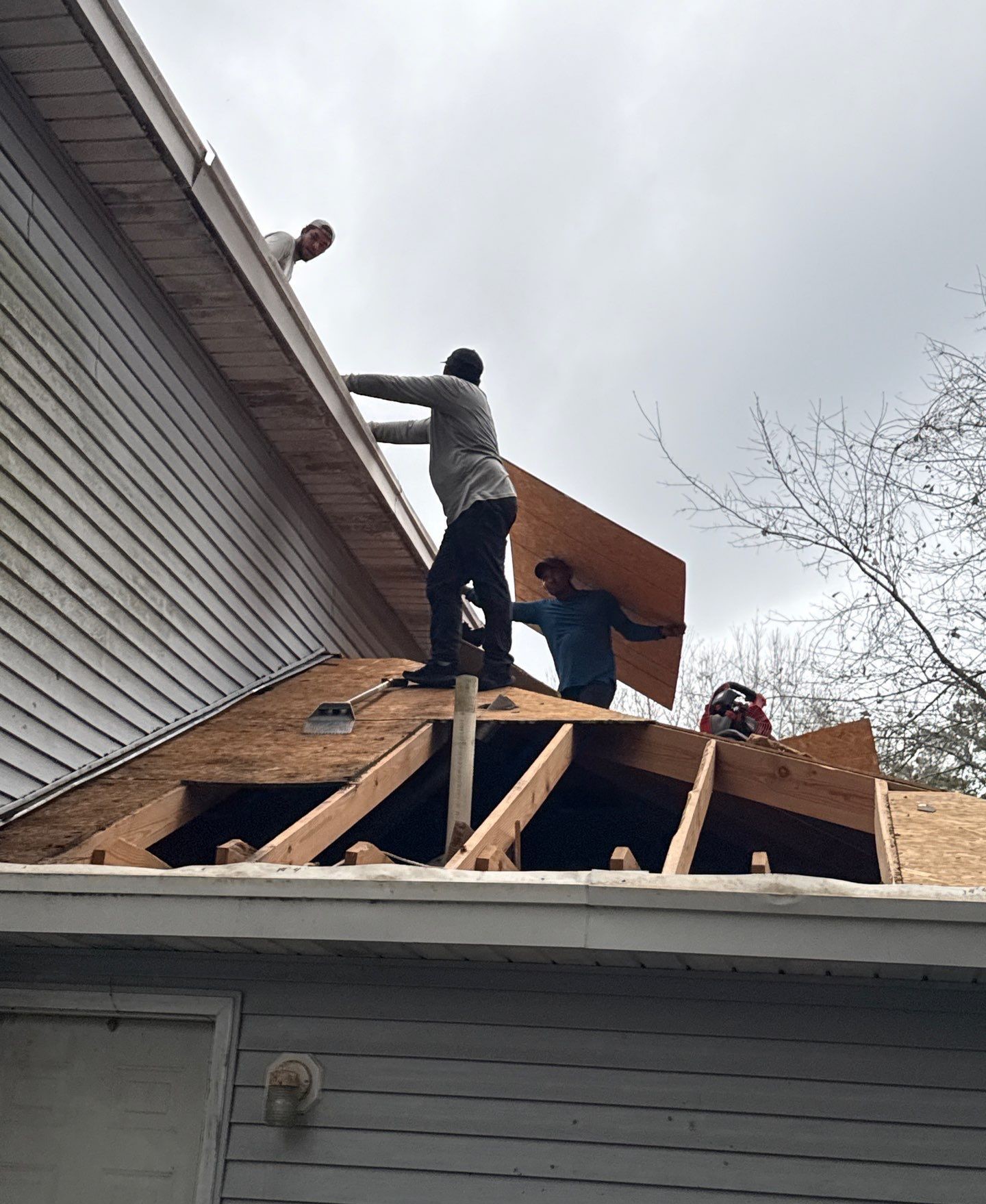
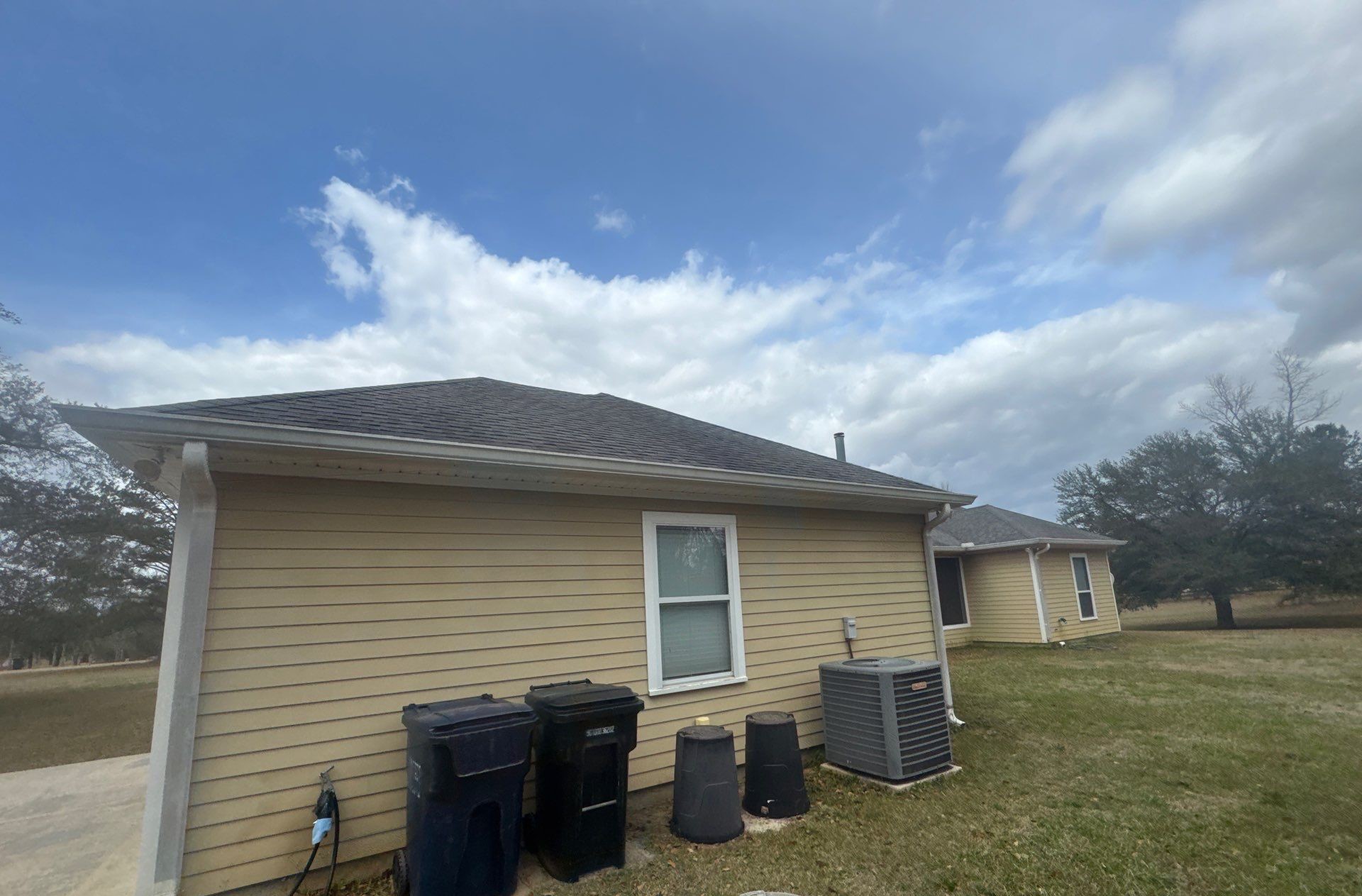
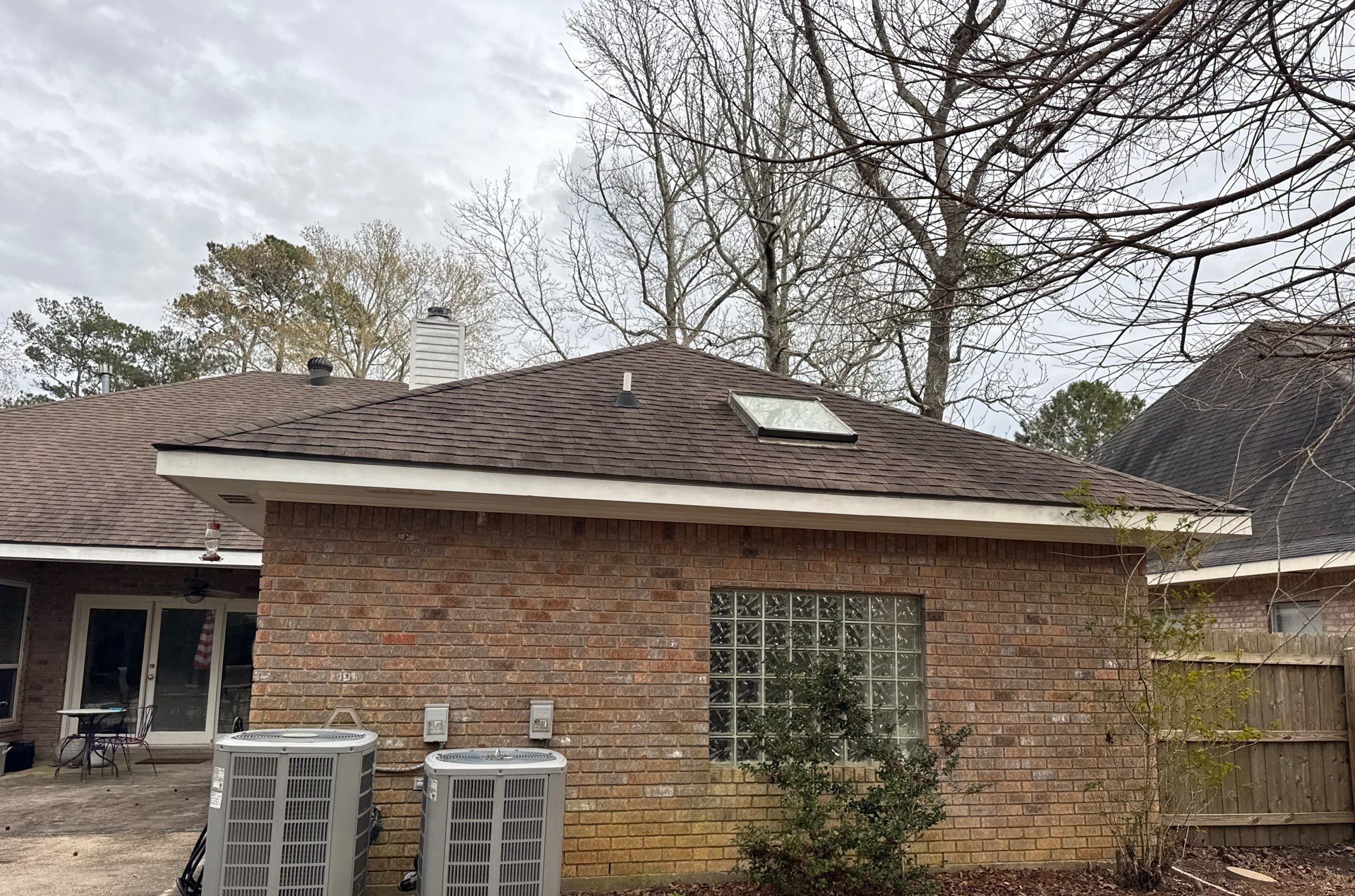
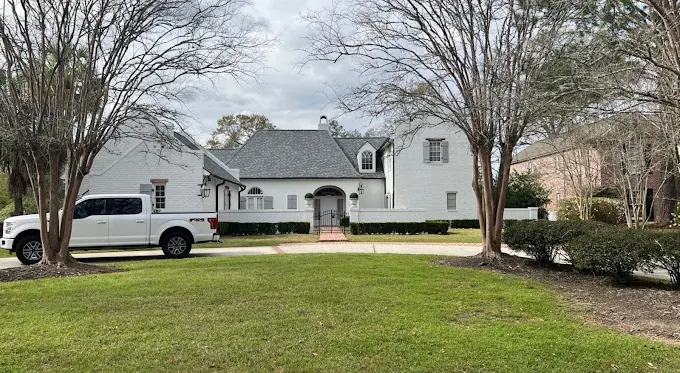
Residential Roof Styles We Service in Louisiana and Texas
Every roof style presents different installation requirements, drainage considerations, and weather exposure characteristics. JosephMill services all major residential roof styles across Denham Springs, Louisiana and Corpus Christi, Texas with material recommendations and installation approaches tailored to each geometry.
Why Your Roof Style Affects Every Decision We Make
Roof style is not just an aesthetic choice. The geometry of your roof directly determines how water drains, how wind loads distribute across the surface, how vulnerable specific areas are to storm damage, and which materials and installation methods are appropriate.
A hip roof behaves completely differently in a high-wind event than a gable roof. A mansard roof has transition points that require different waterproofing details than a simple gable. A flat roof needs drainage management that a pitched roof handles naturally by gravity.
In Louisiana and Texas, where storm frequency, wind uplift, coastal humidity, and extreme heat put roofs under constant stress, understanding your specific roof geometry is the foundation of every repair, replacement, and material recommendation we make. We assess your roof style during every inspection and factor it into every estimate.
JosephMill Company has our recommendation for home roof installation. Ruben Gonzales was our salesman and contact person. He is knowledgeable about construction and insurance information. He was consistent in returning calls, answering questions, and fulfilling commitments. We are so grateful that Ruben and the JosephMill Team came to our house after our insurance company had already denied our claims for roof repair/replacement twice. Even though our insurance company dragged their feet during the approval process, Ruben and the JosephMill Team stayed in touch the entire time. The work crew was experienced and hardworking. They were all hard workers and completed the job in a timely manner. We would highly recommend JosephMill for a great job well done.
The JosephMill crew did a fine job on my roof and the whole process start-to-finish was easy, guided by Alec Joubert. The company worked with my insurance provider, kept me informed throughout the process and the roof installation work was done quickly and efficiently. Great job, thank you.
Jude Kammers worked wonders with my insurance company. Could not have gotten the same results with my insurance if I did it myself. Very pleased. The roof looks great. They'll be my first choice if I ever need another roof!
Many thanks to Joseph Mill roofing. The experience we had with our roof damage and subsequent insurance claim could have been a pain. However, Chase, Chad and Drew walked us through every step of the process in getting the right information to the right people.
Chase was on-site for the two days it took for old roof removal and new roof installation which helped alleviate jittery nerves. The installers were skilled, friendly, respectful and crazy hard workers.
Recently had my roof replaced by this wonderful company! From start to finish I worked with Chase Robichaux and it was a great experience. All of the people that I came in contact with from Joseph Mill were amazing! From quickly responding to any questions I had to leaving my house better than they found it. I was extremely pleased from start to finish. If anyone is looking for a great company that cares about the work they do I can’t recommend them enough!
Jude krammers was the representative I worked with for Joseph Mills roofing company. He was amazing throughout the process for my insurance to agree to replace my roof!!
He communicated with me constantly. He did all the heavy lifting when dealing with the insurance company.
Joseph Mills have replaced a lot of roofs in my neighborhood. All I had to pay was my insurance deductible and now I have a new roof!
I can’t recommend them enough!! 🫶🏻
JosephMill Company has our recommendation for home roof installation. The company provided a very smooth process of removing our old roof and installing a new roof.
Brennan Dicharry was our salesman and contact person. He is knowledgeable about timelines for construction and insurance information. He was consistent in returning calls, answering questions, and fulfilling commitments.
The work crew was experienced, hardworking and pleasant to deal with.
Brennen Dicharry and JoesphMill team is unbelievable. From the inspection and testing of the roofs integrity and proving beyond a doubt that there was storm, wind and hail damage and a new roof was needed. Brennen and team made it happen after being denied twice by State Farm in the past. I'am beyond grateful for all the time, energy, and hard work that was dedicated to making State Farm realize and agree to replace roof. The whole process from communication, claims, roof removal, install, and cleanup couldn't have went any better. Thank you Brennen you are the man and it was a pleasure to do business with you!
Brennan Dicharry and Joseph Mill LLC were wonderful to work with. Their persistence with our insurance claim made the difference in finally getting our new roof. They did not take the initial denial as a final decision. They continued to follow up & submit documentation of our damages until the insurance reconsidered. Brennan was great at keeping us updated & responding to any questions. They showed up early, completed the entire roof in one day & completely cleaned up any debris. Our new roof is beautiful! We highly recommend Brennan & Joseph Mill LLC.
Great experience with JosephMill roofing. Very easy to work with. Crew was fast and efficient and did a great job! Alec Joubert was awesome! He took care of all the details and kept us informed. Alec quickly responded to our questions and made sure that we were completely satisfied. Thank you, Alec! Thank you, JosephMill!
Amazing experience working with Joseph Mills Roofing.. A professional company with an efficient and experienced crew- we ended up with a beautiful roofing and a clean yard. A shout out especially for Alec Joubert!! He made the whole experience smooth and painless. He explained everything in detail, followed up along the way, dealt with the insurance company and all paperwork needed and closed by saying he was there to represent us for the life of the roof. I highly recommend Joseph Mills Roofing!
Joseph Mill Roofing was professional, punctual, friendly, and did a great job on my roof replacement. They kept me updated, used high-quality materials, and cleaned up thoroughly. Highly recommended! Shout out to Justin Day for making the whole process stress-free.
I had such a great experience with this roofing company! From start to finish, everything was handled smoothly and professionally. Alec Joubert was outstanding — professional, kind, and on top of every detail. He made sure everything was taken care of and kept me informed throughout the whole process. It’s refreshing to work with someone who truly cares about their customers and takes pride in their work. Highly recommend this company and definitely ask for Alec!
Use this company to get your new roof! Everyone was so very helpful and responsive throughout the entire process, especially Justin and Scott! From start to finish, Scott saw our project through and helped us get insurance to cover our new roof. Scott was very patient with all my questions and concerns, and always found an answer for me if he didn't know it already. Jorge and his crew were amazing as well when it came time to install the new roof. Jorge kept me informed as the day progressed and even went out of his way to fix another issue in my attic that was unrelated to the roof itself, just out of the kindness of his heart! Great company with great employees who treat you like family. You won't regret using them!
Response from the owner
1 year ago
Thank you so much for the incredible feedback! We’re thrilled that Justin, Scott, and Jorge made the entire process smooth and stress-free for you. Scott’s attention to detail and Jorge’s extra effort in your attic show exactly how we aim to treat every homeowner—like family. We appreciate you trusting JosephMill with your home and your new roof. Enjoy the peace of mind that comes with it, and thank you for recommending us!
—The JosephMill Team
They made the process very easy. Located in Jefferson Terrace. Alec/Drew handled the project and Insurance work. Installation was clean and efficient. Wouldn't hesitate to recommend.
Response from the owner
1 year ago
Appreciate the great review! Alec and Drew always aim to make the process smooth and stress-free. Glad everything went clean and efficient—thanks for trusting us and for the recommendation!
Awesome to work with! Very professional and did a fantastic job. Also helped us with other things we needed to take care of around our house. Highly recommend!
Response from the owner
1 year ago
Thanks for the 5 stars! Justin takes pride in going above and beyond—glad he knocked it out for you. We appreciate the trust and the kind words!
Gaige Duplechin was so helpful and took care of everything. Would recommend Joseph Mill roofing everytime!
Response from the owner
1 year ago
Thank you so much, Kelli! We’re glad to hear Gaige took great care of you—he’s a key part of our team and always goes the extra mile. We truly appreciate your recommendation and look forward to helping with any future roofing needs!
—The JosephMill Team
Scot Beatty at Joseph Mills was amazing from start to finish. Not only did the tarp on my roof make it through the hurricane he walked me through the nightmare that is home owner’s insurance. Thank you Scot and Joseph Mills!
Response from the owner
1 year ago
We really appreciate the time it takes for you to leave us a review. We also love hearing the testimonies of homeowners who got a win! Thanks for trusting us with your home.
A truly great experience with the company. Alec Joubert was our contact person/salesman. He kept us informed every step of the way. We highly recommend JosephMill.
You will not be disappointed ⭐️⭐️⭐️⭐️⭐️
Response from the owner
1 year ago
We love hearing about great experiences. Thank you for your business and taking the time to leave us a review. The whole JM team appreciates you.
We had a great experience working with JosephMill Roofing, especially with Chase. Even though our insurance company dragged their feet during the approval process, Chase and the team stayed in touch the entire time and made sure we never felt like we were dealing with it alone. Their communication was consistent, their customer service was top-notch, and they genuinely cared about helping us get everything taken care of. Highly recommend JosephMill Roofing to anyone needing a reliable and responsive roofing company!
Scott Beatty at Joseph Mill is the guy you need if you need a new roof and don’t know how to deal with the insurance company. And he is honest. If you don’t need a new roof, he will tell you so. If you do, he will be relentless in making it happen. Originally, my insurance company denied my claim and Scott went back to them no less than three times until they agreed to replace my entire roof due to the irreparable damage it received during a storm. Scott is a great communicator and always promptly answers his phone and texts. My new roof was completed in one day, yes ONE! It looks beautiful and I couldn’t be happier with the entire process. I highly recommend Joseph Mill if you need a new roof!
From start to finish, any questions or concerns we had were addressed in a timely manner. Every person we interacted with was polite and knowledgeable. The men who installed our new roof worked hard and did their very best to get everything finished quickly while maintaining a quality service.
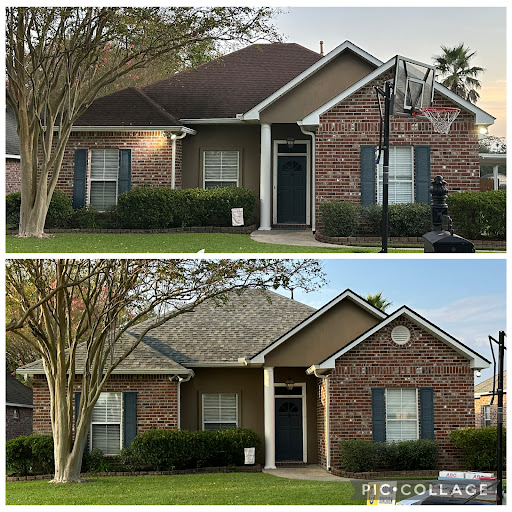
I highly recommend Joseph Mill to do your roof. Mr. Ruben Gonzalez did a great job from the beginning until the end. I honestly thought I would not be able to have my roof replaced when he spoke with me the first time because I could not afford it. However, after he did an inspection and told me that I would likely qualify for benefits from my insurance company I had some hope, but still seemed almost impossible to me. Everything changed when Mr. Gonzalez did the paperwork and helped me submit the claim. A new roof was an actual possibility.
I was later disheartened because the insurance company would not pay for the roof replacement in full, but only part of it. To my surprise Mr. Gonzalez told me that a promise was a promise and that they would have my roof replaced even though the insurance company slashed my check by $4K. You just don’t find companies and people like them easily nowadays. The roofing crew did an awesome job! Thank you guys!
I still remember when I first spoke with Mr. Gonzalez. His visits have been nothing short of a heavenly blessing.
JosephMill came out to do a complementary roof inspection. After checking out our roof, he reported that it was in good shape and did not try to sell anything.
They were totally honest and that is a good thing.
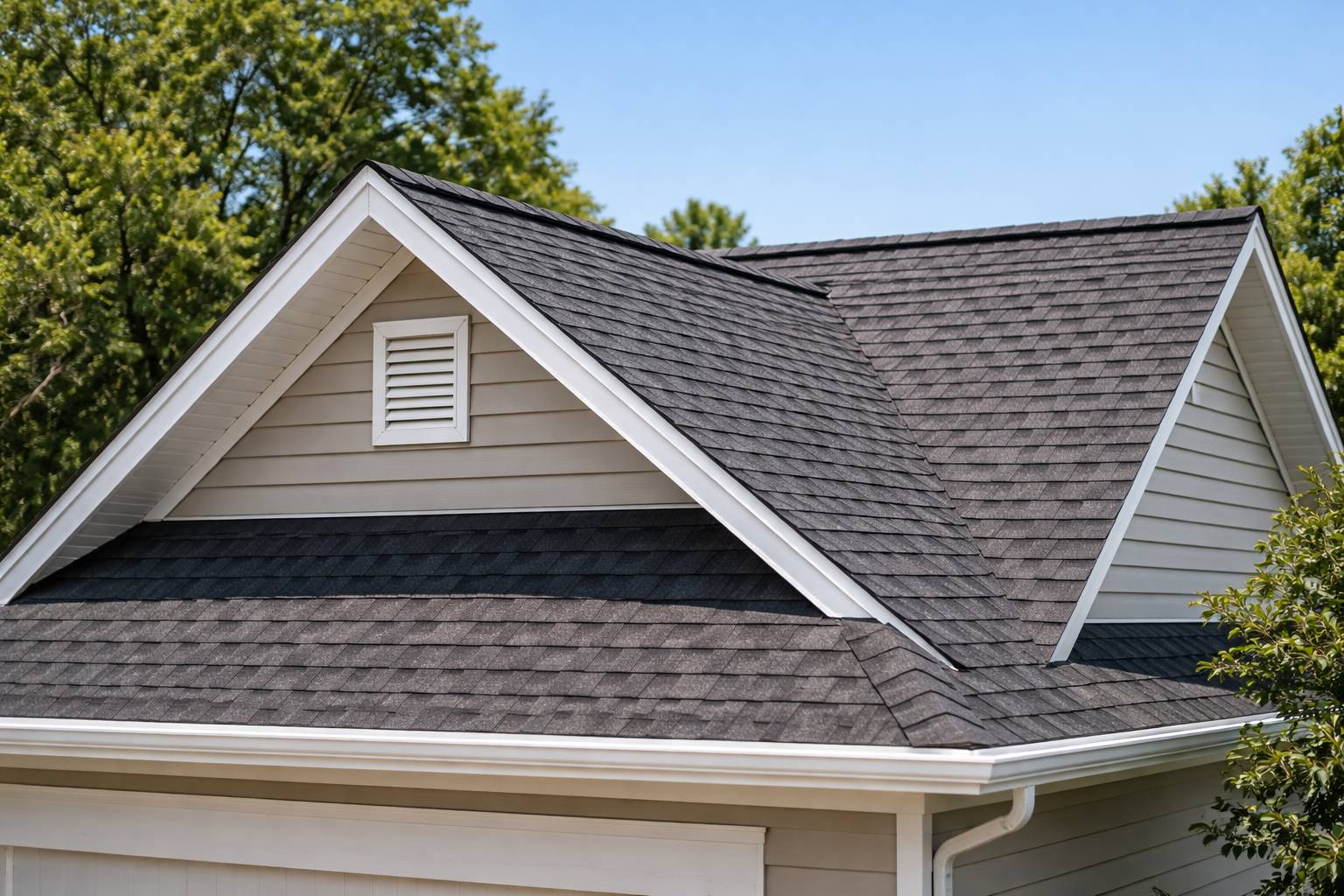
A gable roof is the most common residential roof style in Louisiana and Texas. It consists of two sloping sides that meet at a central ridge, forming a triangular shape at each end of the structure. The simplicity of the gable design makes it one of the most cost-effective roof styles to install and repair.
What makes gable roofs unique in Louisiana and Texas: Gable roofs are effective at shedding water and ventilating heat, which are important qualities in the high-rainfall and high-heat environments of South Louisiana and coastal Texas. However, the flat triangular end walls of a gable roof, called rake edges, are vulnerable to wind-driven rain infiltration and uplift during high-wind events. In hurricane and tropical storm conditions, the rake edge and ridge details of a gable roof require specific attention to prevent failure.
What we focus on with gable roofs: Rake edge sealing, ridge cap installation, and proper starter strip application are the three areas we pay closest attention to on every gable roof. These are the locations where wind-driven water most commonly finds a path into the structure.
Hip Roofs
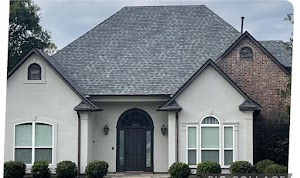
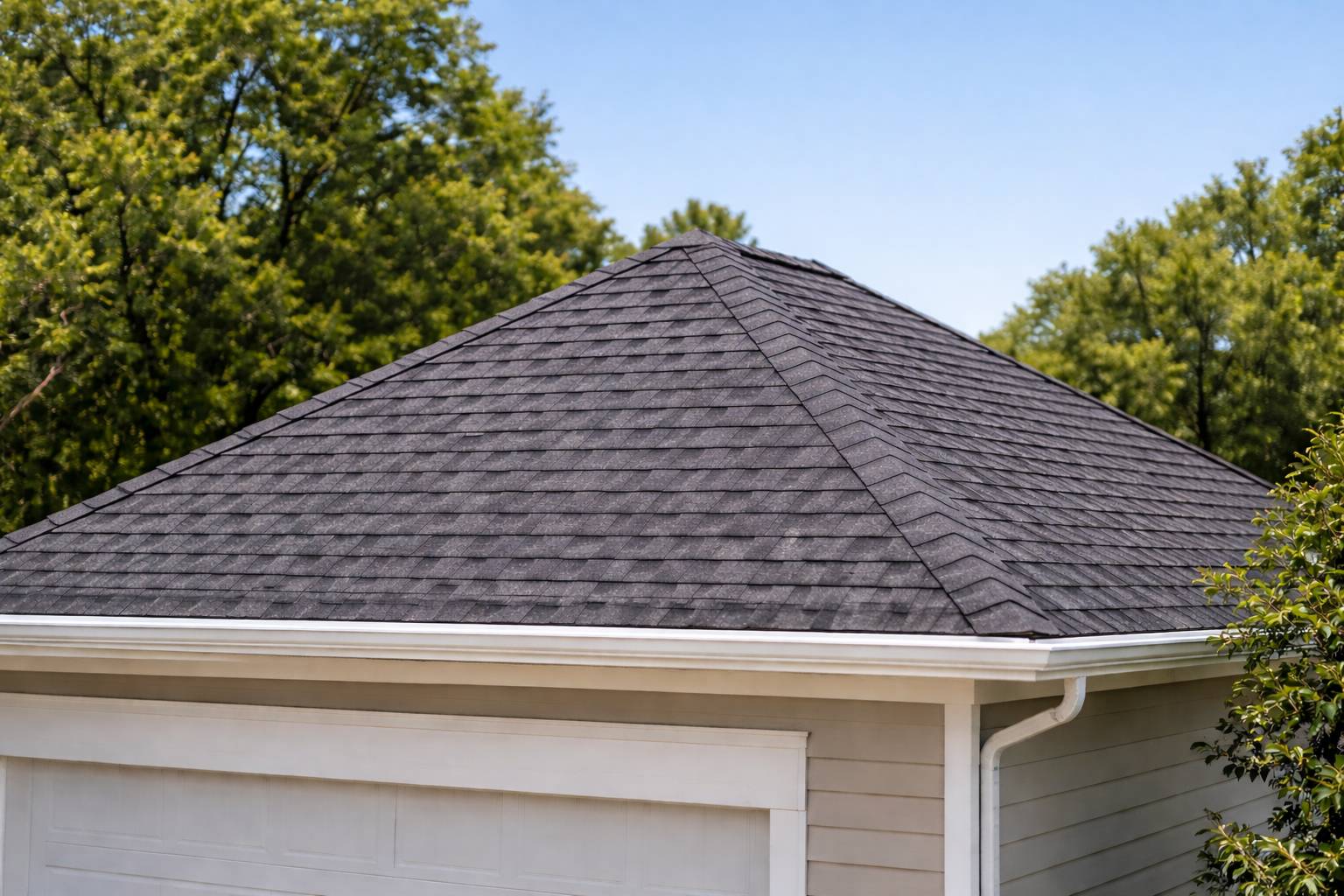
A hip roof has four sloping sides, and all sides slope downward to the walls with no vertical end walls. This design eliminates the exposed rake edges of a gable roof and creates a more aerodynamic profile that distributes wind loads more evenly across the entire roof surface.
What makes hip roofs unique in Louisiana and Texas: Hip roofs are inherently more wind-resistant than gable roofs, which is a significant advantage in Louisiana and Texas storm markets. The absence of exposed vertical end walls reduces the surface area that wind can act against. For this reason, hip roofs are common in newer residential construction throughout South Louisiana and the Texas Gulf Coast, where wind resistance is a priority.
The trade-off is complexity. Hip roofs have more valleys, more hip cap lines, and more intersection points than gable roofs, each of which requires careful installation to maintain a watertight seal. A hip roof done correctly outperforms a gable roof in high-wind conditions. A hip roof with poorly installed valleys or hip caps will develop leaks faster than a simpler design.
What we focus on with hip roofs: Valley flashing, hip cap installation, and the intersection between hip lines and the main roof field are the critical areas on every hip roof we service. These are the points of greatest complexity and greatest leak risk.
Services available: Repair, Replacement Materials: Atlas asphalt shingles, standing seam and exposed fastener metal roofing
Gambrel Roofs (Barn Style)
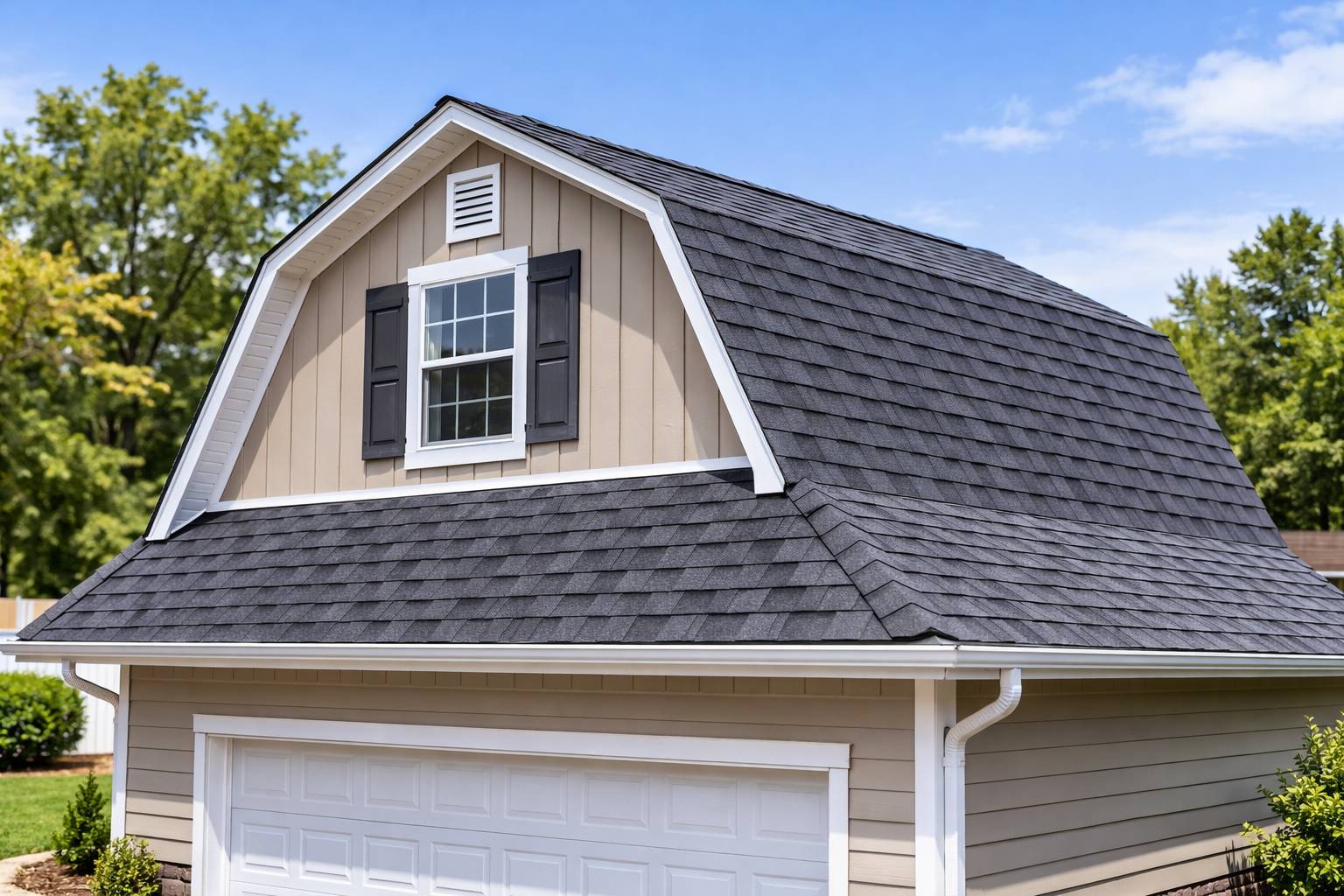
A gambrel roof features two different slopes on each side, a shallower upper slope and a steeper lower slope, creating the distinctive barn-style silhouette. This design maximizes interior space under the roof while maintaining effective water shedding on the steeper lower sections.
What makes gambrel roofs unique in Louisiana and Texas: The transition line between the upper and lower slopes, called the gambrel break, is the most critical waterproofing challenge on this roof style. Water flowing down the upper slope accelerates and changes direction at the break point. Without proper underlayment detailing and flashing at this transition, water can infiltrate at the break line even when the rest of the roof surface is intact.
Louisiana and Texas rainfall intensity, particularly during storm events, puts significant stress on gambrel break transitions. This is an area where installation quality matters enormously.
What we focus on with gambrel roofs: The break line transition is our primary focus on every gambrel roof. We treat this transition with the same attention we give to a valley on a complex hip roof because it carries the same level of water management responsibility.
Services available: Repair, Replacement Materials: Atlas asphalt shingles, standing seam and exposed fastener metal roofing
Mansard Roofs
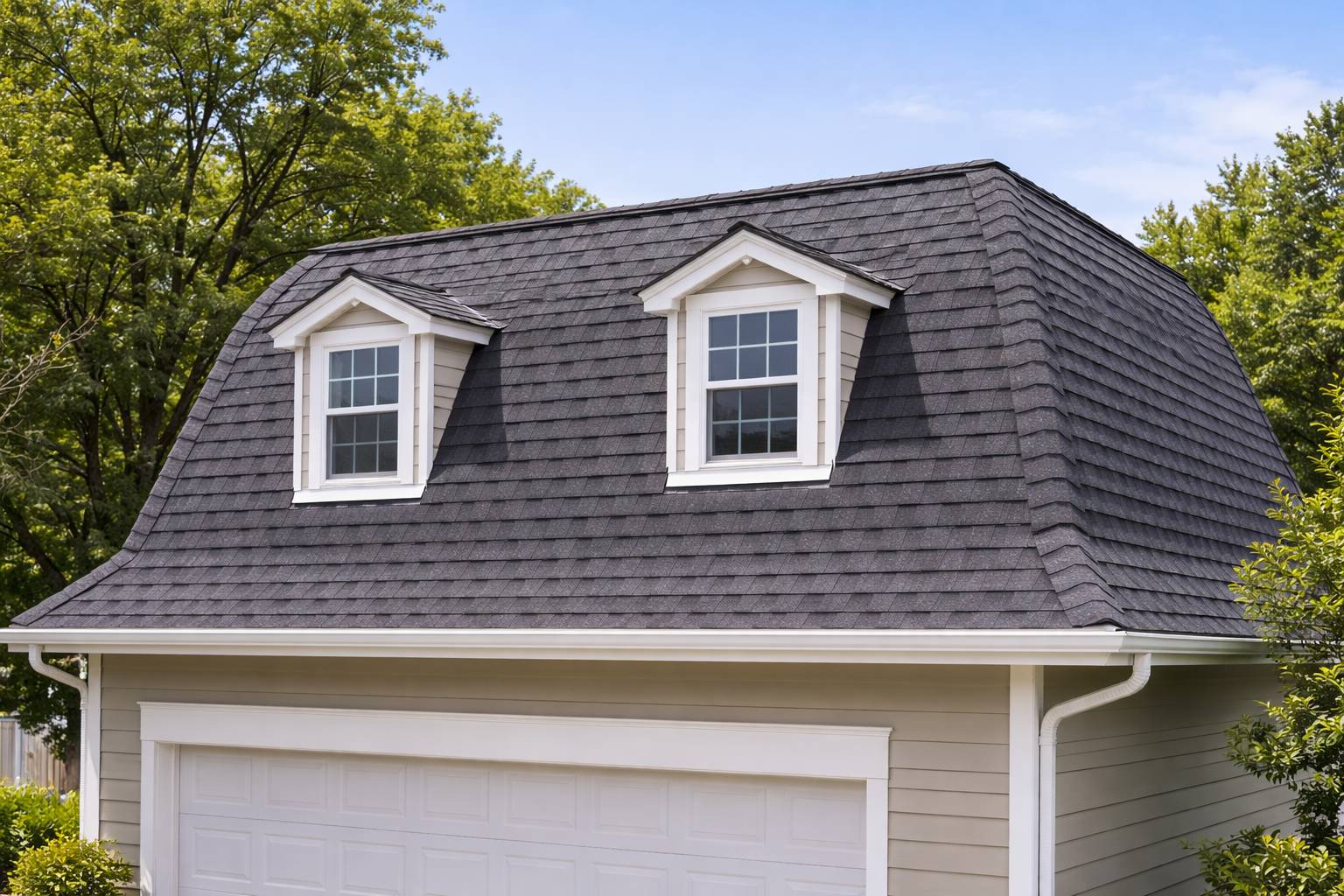
A mansard roof has four sides with two slopes on each side. The lower slope is nearly vertical, while the upper slope is shallow and often not visible from street level. This design was popularized in French architectural tradition and appears frequently on historic and period-style homes throughout Louisiana.
What makes mansard roofs unique in Louisiana and Texas: The nearly vertical lower slope of a mansard roof behaves more like a wall than a traditional roof surface and requires installation approaches that account for this. Standard horizontal shingle installation patterns are not always appropriate on near-vertical surfaces. The transition between the steep lower slope and the shallow upper slope creates a complex intersection that is highly vulnerable to water infiltration if not detailed correctly.
Louisiana’s historic architecture includes a significant number of mansard-roofed properties. Servicing these roofs requires understanding the specific challenges of near-vertical roofing surfaces and complex upper slope transitions.
What we focus on with mansard roofs: The transition between the lower and upper slopes is the most critical area. We also pay close attention to dormer intersections, which are common on mansard roofs, where vertical walls meet sloped surfaces and flashing details are complex.
Services available: Repair, Replacement Materials: Atlas asphalt shingles, standing seam and exposed fastener metal roofing
Flat Roofs
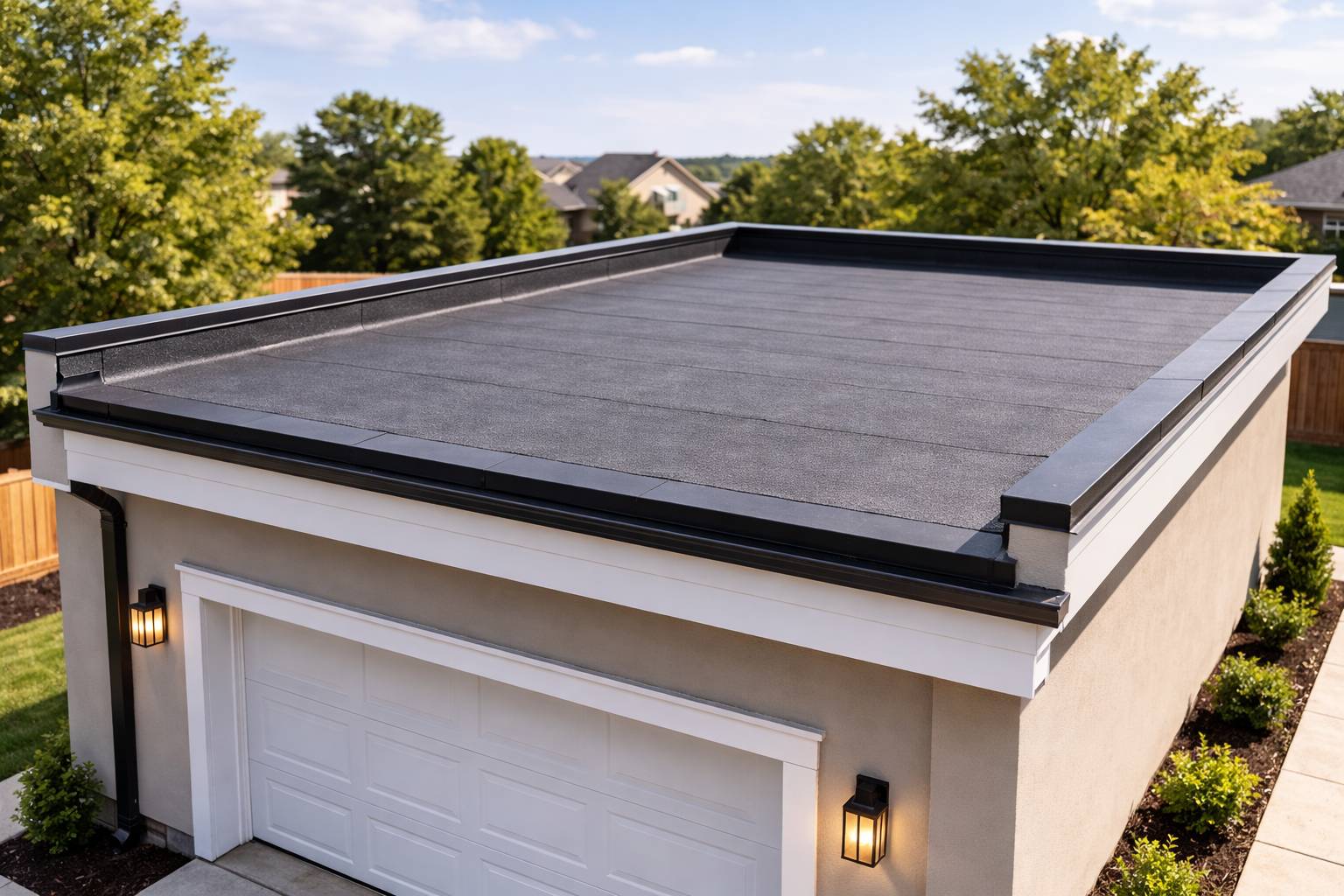
A flat roof is not perfectly flat. It has a slight slope (typically between one quarter inch and one half inch per foot) designed to direct water toward drains or scuppers. Flat roofs are common on additions, garage structures, and certain architectural styles throughout Louisiana and Texas.
What makes flat roofs unique in Louisiana and Texas: Drainage management is the defining challenge of flat roof performance in high-rainfall environments. Louisiana and Texas receive significant annual rainfall and flat roofs with inadequate drainage or blocked drains accumulate standing water that accelerates surface deterioration and creates constant leak pressure.
Heat is the second major factor. Flat roof surfaces in Louisiana and Texas absorb significant solar radiation, making proper waterproofing and surface selection important performance considerations for both energy efficiency and material longevity.
What we focus on with flat roofs: Drainage design, surface integrity, and waterproofing condition are the three factors we assess on every flat roof inspection. Ponding water, water that remains on the surface for more than 48 hours after rainfall, is a red flag we address in every flat roof estimate.
Services available: Repair, Replacement Materials: Exposed fastener metal roofing
Combination Roofs
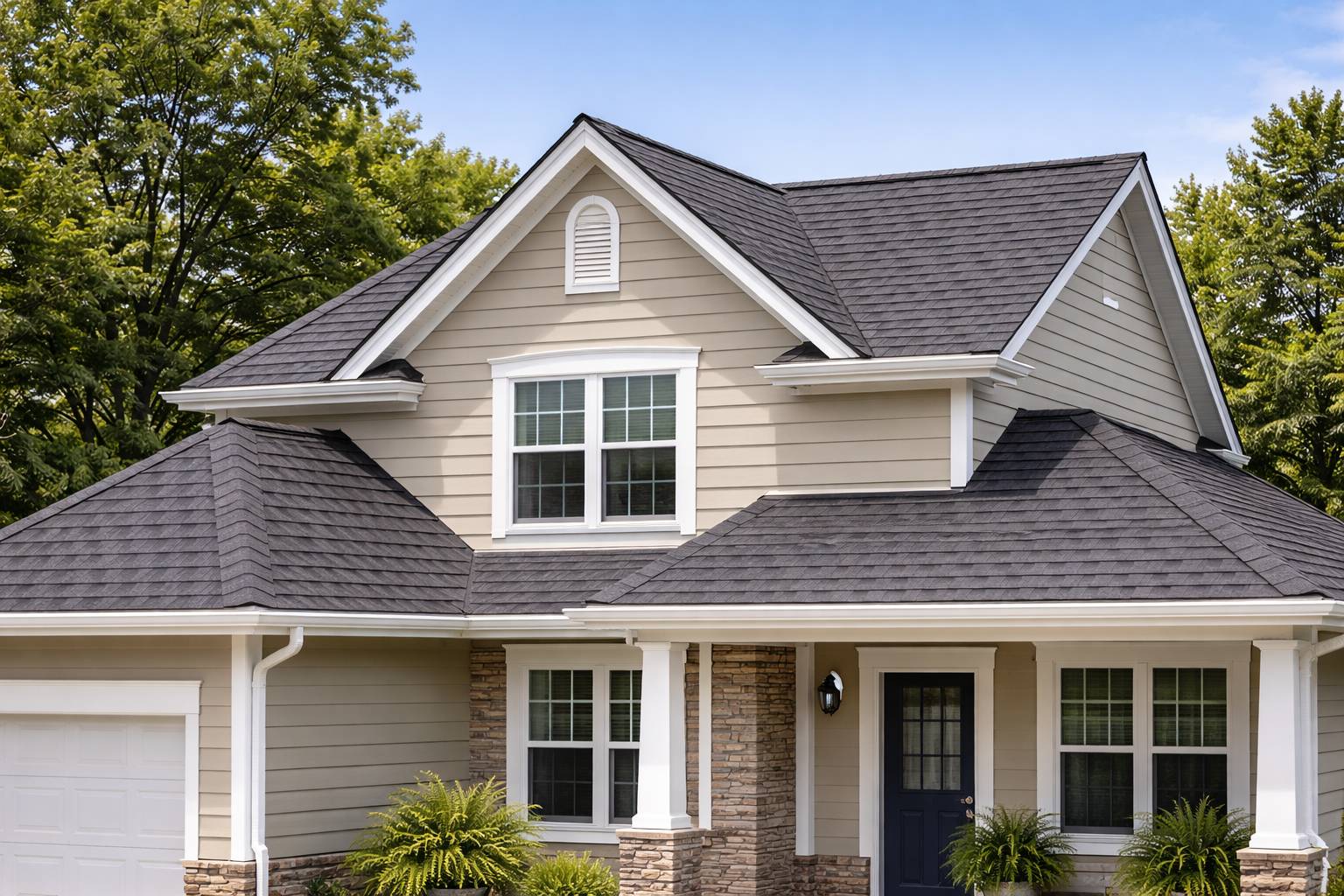
A combination roof incorporates two or more different roof styles on the same structure, a gable section over the main body of the home with a hip section over an addition, for example, or a flat roof section over a rear garage connected to a gable-roofed main structure.
What makes combination roofs unique in Louisiana and Texas: Combination roofs are the most complex residential roof geometry to service correctly. Every point where two different roof styles meet creates a valley, a transition, or a geometry change that requires specific waterproofing detailing. The more complex the combination the more intersection points exist and each intersection is a potential leak point if not installed correctly.
Storm events in Louisiana and Texas put every intersection under simultaneous stress. A combination roof that has been installed without careful attention to transition details will develop leaks at those transitions after the first significant storm.
What we focus on with combination roofs: We document the full roof geometry during every inspection of a combination roof, mapping every valley, transition, and intersection before we write an estimate. Every point of complexity is addressed specifically in the estimate so you know exactly what is being done at each critical location.
Services available: Repair, Replacement Materials: Atlas asphalt shingles, standing seam and exposed fastener metal roofing
Regardless of your roof style our assessment process is the same thorough, documented, and specific to your geometry.
Full Surface Inspection We inspect every section of the roof surface, not just the area where a problem has been reported. Different roof styles concentrate wear and vulnerability in different locations. We know where to look based on your specific geometry.
Geometry Documentation We document your roof’s geometry with photos and written notes. For complex roof styles, mansard, gambrel, and combination. We map the transition points and intersection locations specifically. This documentation forms the basis of every estimate we write.
Material Matching When repairing an existing roof we match materials as closely as possible to your existing system. When recommending a replacement we factor your roof geometry into the material recommendation some materials perform better on certain roof styles than others.
Local Weather Context Every assessment considers the specific weather conditions your roof faces in your location. A gable roof in Denham Springs faces different wind exposure than a gable roof in Corpus Christi. We factor this into every recommendation.
Find answers to our most commonly asked questions, from our services and pricing to the benefits of working with us. For more assistance, feel free to reach out to our team!
Which roof style is most wind resistant in Louisiana and Texas?
Hip roofs are generally the most wind-resistant residential roof style because they eliminate the exposed vertical end walls of gable roofs and distribute wind loads more evenly across the entire structure. This makes hip roofs a strong choice in hurricane and high-wind markets like South Louisiana and the Texas Gulf Coast. That said installation quality matters as much as style — a well-installed gable roof outperforms a poorly installed hip roof in any wind event.
Which roof style is the most expensive to replace?
Complexity drives cost. Simple gable roofs are the least expensive to replace due to their straightforward geometry. Mansard and combination roofs are typically the most expensive due to their complex transition points, multiple intersection details, and the additional labor required to waterproof them correctly. Hip roofs fall in the middle — more complex than gable but less so than mansard or combination designs.
Can you repair any roof style or only replace them?
We repair all six roof styles we service. Whether repair or replacement is appropriate depends on the extent and location of damage, the condition of the decking, and the age of the existing material — not the roof style itself. We assess every roof individually and recommend the most cost-effective solution based on what we find.
My roof is a combination of styles — can you handle that?
Yes. Combination roofs are among the most complex residential roofs to service correctly and we specifically document every transition and intersection point during our inspection. Every area of complexity is addressed in the estimate so nothing is overlooked.
How does roof style affect material recommendations in Louisiana and Texas?
Your roof style directly affects which materials and installation methods are appropriate for your specific geometry. A mansard roof’s near-vertical lower slopes require different shingle installation than a standard gable pitch. A flat roof requires coatings rather than shingles. A hip roof’s multiple valleys require specific flashing details that a gable roof doesn’t have. We factor your roof style into every material recommendation we make Atlas asphalt shingles, standing seam and exposed fastener metal, and roof coatings each have specific applications depending on pitch, exposure, and geometry.