
The best time to prepare your roof for a hurricane is months before one forms, not the week it appears in the forecast. A calm-weather inspection, a few ground-level checks, and good documentation are what separate a roof that holds up from one that peels apart.
Here is a straight, Louisiana-specific plan: what to do before the season, what to check yourself, what a pro handles, and how to document your roof so a claim is airtight if a storm does hit.
Now, if you have not already. Louisiana hurricane season runs June 1 through November 30, and it peaks in late August and September.
The mistake most homeowners make is waiting for a named storm. By then, every roofer in the parish is booked, and any repair you needed is now a scramble.
The right window is late spring, before June. That gives you time to fix a weak point on a calm day instead of discovering it mid-storm. If you are reading this during the season and have not had your roof checked, do it now rather than waiting for the next one to form.
Plenty, and all of it from the ground. Never climb onto the roof to inspect it, especially with a storm approaching. Wet shingles and weak decking make that genuinely dangerous.
From the yard, with binoculars if you have them, look for:
Edges and corners matter most. Hurricane wind pulls hardest there, so that is where damage almost always starts. A shingle already lifted at a corner on a calm day is the first thing a storm will grab.
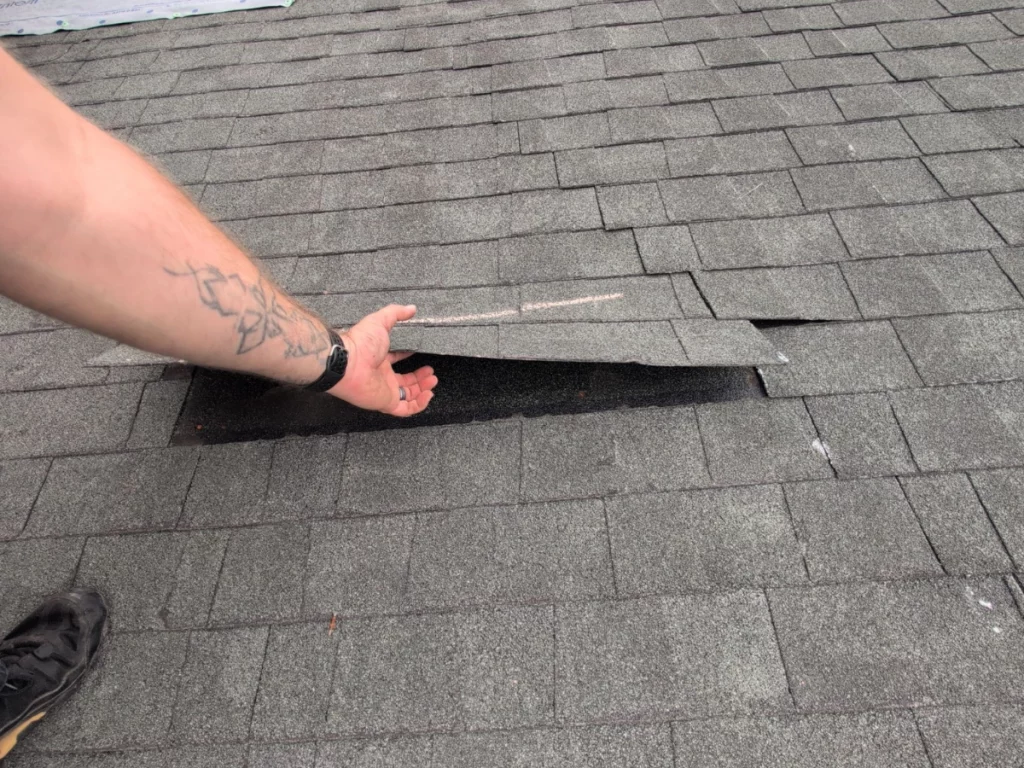
Because of how wind moves over a roof. As wind crosses the surface it speeds up and creates lift, the same force that lifts an airplane wing. That lift is strongest at the perimeter, the ridge, and the corners, where wind wraps around the house and accelerates.
Once one shingle lifts, wind gets underneath it and works on the next. That is why a roof can handle ordinary weather for years and still start shedding shingles the moment strong gusts hit a corner.
This is also why how a roof is fastened matters more than most homeowners realize. Shingles carry a wind rating. Standard shingles are rated for much lower speeds, while higher-rated classes are built and tested to hold in stronger wind. Roofs installed with reinforced nailing at the edges and higher-rated shingles resist that first edge lift far better. If you are due for a new roof anyway, that rating is worth asking about.
The parts that fail quietly. A homeowner can spot a missing shingle. A roofer checks the things that let water in without any obvious sign from the ground.
A pre-season inspection focuses on:
Here is the part homeowners underestimate. Storm damage often looks worse weeks after a hurricane than the day after. Missing shingles are obvious right away. A torn underlayment or a deck that started soaking during the wind is not, and it may show up only as a faint musty smell in the attic or a stain that appears on the ceiling days later. Catching those weak points in the spring is far easier than discovering them after.
It is worth knowing about, because Louisiana now rewards it. FORTIFIED is a construction standard from the Insurance Institute for Business and Home Safety, built specifically to resist hurricane damage with a sealed roof deck, reinforced edges, and stronger fastening.
Louisiana offers real money toward it:
A FORTIFIED designation has to be certified by a separate third-party evaluator, not the roofer alone. If you are already planning a roof replacement, it is worth asking whether building to the FORTIFIED standard makes sense for your home and your insurance.
Once a storm is in the forecast, the window for repairs has closed, but there are still smart moves. In the days before:
That last step is the one homeowners skip, and it is the most valuable.
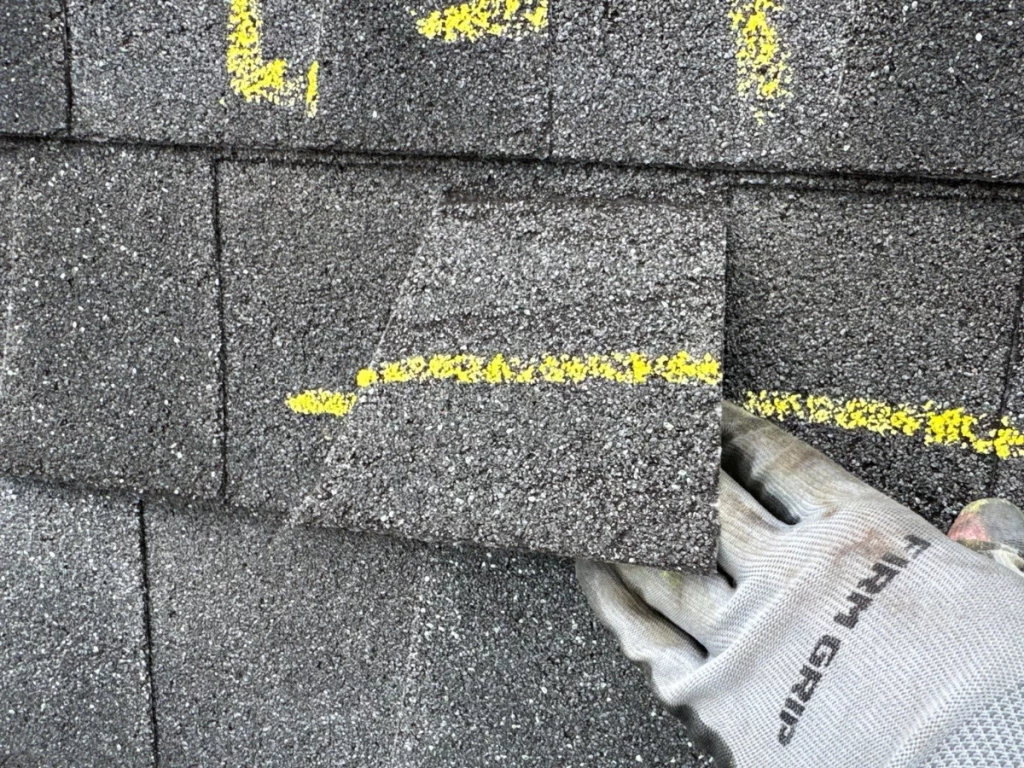
Because a “before” picture is what wins a fair claim. Everyone documents damage after a storm. Almost no one documents the roof in good condition before.
That before-and-after record is what proves the storm caused the damage, rather than pre-existing wear. Wear and tear is the single most common reason carriers deny a roof claim, so a dated photo of your intact roof, taken before the season, closes that door.
If a storm does damage your roof, document it right away with dated photos, then have it inspected. JosephMill documents every area of damage with photos and a written report, giving you clear evidence to file with your own insurer while you stay in control of your claim. Our guide to the Louisiana roof insurance claim process walks through the deadlines and steps from there.
Shingles carry a wind rating set by testing standards in the building code. Standard shingles are rated for lower speeds, while higher-rated classes are tested to hold in much stronger wind. Uplift is always worst at the edges and corners, so a roof often starts losing shingles there well before the rest of the surface is threatened.
Yes, and this is common. Wind can lift and reseat shingles, tear underlayment, or start the decking soaking without any obvious sign from the yard. That is why damage often appears weeks later as an attic odor or a ceiling stain, and why a post-storm inspection is worth it even if the roof looks intact.
Yes. Older shingles are more brittle, their sealant bonds have weakened, and they lift more easily under uplift. An aging roof in Louisiana heat is more vulnerable to wind than a newer, well-fastened one, which is one reason a pre-season inspection matters more as a roof gets older.
No. A ground-level look with binoculars is reasonable, but climbing onto the roof is dangerous, especially on wet shingles or weakened decking, and walking on shingles damages them. Any closer look should be done by a professional with proper equipment.
Late spring, before June 1, is ideal, because it leaves time to fix weak points before a storm arrives. If the season is already underway and you have not had your roof checked, do it as soon as you can rather than waiting.
Every way a hurricane attacks a roof has a smaller, quieter version already present on a worn roof before the wind arrives. A lifted corner shingle. A cracked flashing seal. A loose fascia panel. A storm finds every one of them.
If you have not had your roof looked at this season, book a free roof inspection with JosephMill. We check the fastening, flashing, edges, and decking, show you what we find with photos, and give you a straight answer on what needs attention before the next storm. Serving Denham Springs, Walker, Baton Rouge, Central, Baker, Zachary, Hammond, and the nearby Livingston Parish area. Call (225) 500-1444.