
After a hurricane, hailstorm, or line of severe weather moves through Louisiana, the roof insurance claim process is what stands between you and a properly covered repair or replacement. Handled well, with clear documentation and an understanding of your rights under Louisiana law, you give yourself the best chance at a fair settlement. Handled poorly, you risk an underpaid claim, a missed deadline, or a denial. Here is how the process actually works in Louisiana, and the state laws that protect you.
As soon as it is safe after a storm, document everything. Capture dated photos of every damaged area, including shingles, flashing, gutters, vents, and soffits, plus close-ups showing the type of damage, whether hail bruising, wind-lifted or missing shingles, or granule loss. Photograph any interior signs of a leak, such as ceiling stains or wet insulation.
Do not wait. Many Louisiana policies require you to report a loss within a set window, and late reporting is one of the most common and avoidable reasons a claim runs into trouble. If it is safe, take reasonable steps to prevent further damage, such as temporary tarping, since most policies expect you to limit additional loss while the claim is pending.
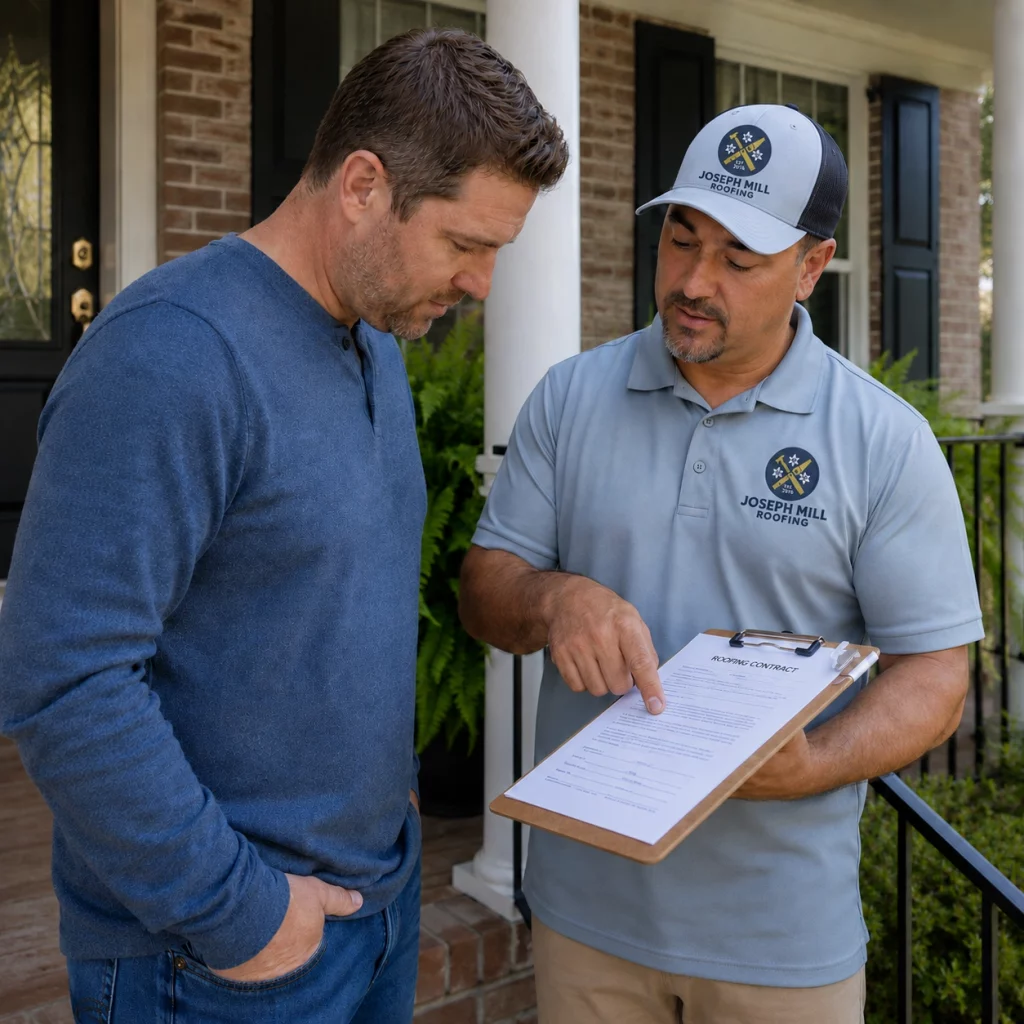
Before you file, have a licensed Louisiana roofing contractor inspect the roof and document what they find. A trained roofer sees damage an untrained eye misses, and a written report with photos gives you organized evidence for your claim. Local knowledge matters too: a Louisiana contractor understands how Gulf wind and hail damage presents, what our building codes require, and how carriers in this state scope roof claims.
One important note on state law: it is illegal in Louisiana for a roofer to waive or pay your deductible. An offer to “cover your deductible” or “get you a free roof” is a red flag that the contractor is operating outside the law. It is one of several things worth reviewing when you are deciding what to check before hiring a roofer.
At JosephMill, a licensed, BBB-accredited Louisiana roofing contractor, every inspection produces a documented record of the damage, with photos and a written report, before a claim is ever filed. That gives you clear evidence to submit to your own insurer while you stay in full control of your claim. Reach the team at (225) 500-1444.
Contact your insurer to report the loss, with your policy number, the exact storm date, the type of weather event, and your documentation ready. Your carrier will issue a claim number and assign a field adjuster. Before that adjuster arrives, check two things in your policy:
The field adjuster will inspect the roof and produce a Scope of Loss, the document listing every line item approved for payment. This becomes the financial blueprint for your claim, so having your contractor present helps ensure nothing is overlooked. Items that frequently get underscoped include code-upgrade requirements like ice-and-water shield, starter strips and drip edge, removal and reinstallation of rooftop equipment, and permit fees. If legitimate items are missing, your contractor can file a supplement with supporting photos. A supplement is not a dispute or fraud; it is the standard way scope gaps get corrected after the initial estimate.
Once the scope is agreed on, your carrier issues the initial payment. If you have RCV coverage, this first check reflects Actual Cash Value, with depreciation withheld for now. After the roof replacement is done, your contractor provides a final invoice and completion documentation, which you submit to release the remaining recoverable depreciation and close the claim. Do not skip this step: homeowners sometimes leave a substantial amount unclaimed simply because they did not follow up after the roof was finished.
This is where Louisiana homeowners have more protection than most realize.
Payment deadlines. Under R.S. 22:1892, once your insurer receives satisfactory proof of loss, they must begin adjusting the claim within 14 days and pay an undisputed standard claim within 30 days. Under R.S. 22:1892.2, a catastrophic loss from a named storm must be paid within 60 days for residential property. When an insurer misses these deadlines and a court finds the conduct was arbitrary or without probable cause, the insurer can face statutory penalties.
Your right to the adjuster’s report. Under R.S. 22:1892, you can request a copy of your insurer’s field adjuster report, and the insurer must provide it within 15 days. If you believe your roof was underscoped, that report shows exactly what the adjuster recorded.
Named-storm deductibles over a season. Your deductible applies only once per calendar year. If your roof is damaged by more than one storm in the same year, you are generally not charged the full percentage deductible again for the second event, which protects you during an active storm season.
If your claim is underpaid or denied, request the reason in writing and ask for a re-inspection, have your contractor file a supplement, or invoke your policy’s appraisal clause. If those steps do not resolve it, a licensed public adjuster or an insurance attorney can advise you. Wear and tear is the most common denial basis, so if your roof was maintained and the damage is clearly storm-related, organized documentation gives a well-supported appeal a real chance.
Louisiana homeowners face roofing challenges most of the country does not: extreme heat, heavy humidity, and the constant threat of hurricanes and named storms. That is why it helps to work with a roofer who knows the local landscape, understands how our building codes and carriers handle roof claims, and documents damage the way this climate demands.
JosephMill is a third-generation, family-owned contractor serving Denham Springs, Baton Rouge, and the surrounding Livingston Parish communities. Whether it is your first storm claim or your third, the right contractor’s job is to inspect your roof thoroughly and put clear, organized documentation in your hands, so your own claim stands on solid evidence from the start.
Ready to get started? Visit the JosephMill office in Denham Springs or call us at (225) 500-1444 to book your free roof inspection.
Under R.S. 22:1892, an insurer must begin adjusting a standard claim within 14 days and pay an undisputed claim within 30 days of satisfactory proof of loss. Under R.S. 22:1892.2, catastrophic losses from a named storm must be paid within 60 days for residential property. You can also request a copy of the adjuster’s report, which must be provided within 15 days.
Named-storm deductibles are a percentage of your home’s insured value, often 2% to 5%, rather than a flat dollar figure. On a $300,000 home, a 2% deductible means $6,000 out of pocket before coverage begins. It applies only once per calendar year.
No. It is illegal for a roofing contractor to waive, pay, or rebate your deductible. Any contractor offering a “free roof” or promising to absorb your deductible is operating outside state law.
Request a written explanation and a re-inspection, have your contractor file a supplement backed by documentation, or invoke your policy’s appraisal clause. If those do not work, a licensed public adjuster or an insurance attorney can advise you further.
A fair roof insurance settlement in Louisiana comes down to preparation and documentation, backed by the protections state law already gives you. Know your deductible, understand your ACV or RCV coverage, document the damage thoroughly, and know the payment deadlines your insurer must meet. Before you call your insurer, have a licensed Louisiana roofer inspect and document the damage in writing. It is the single most valuable move you can make, and it costs you nothing to start.