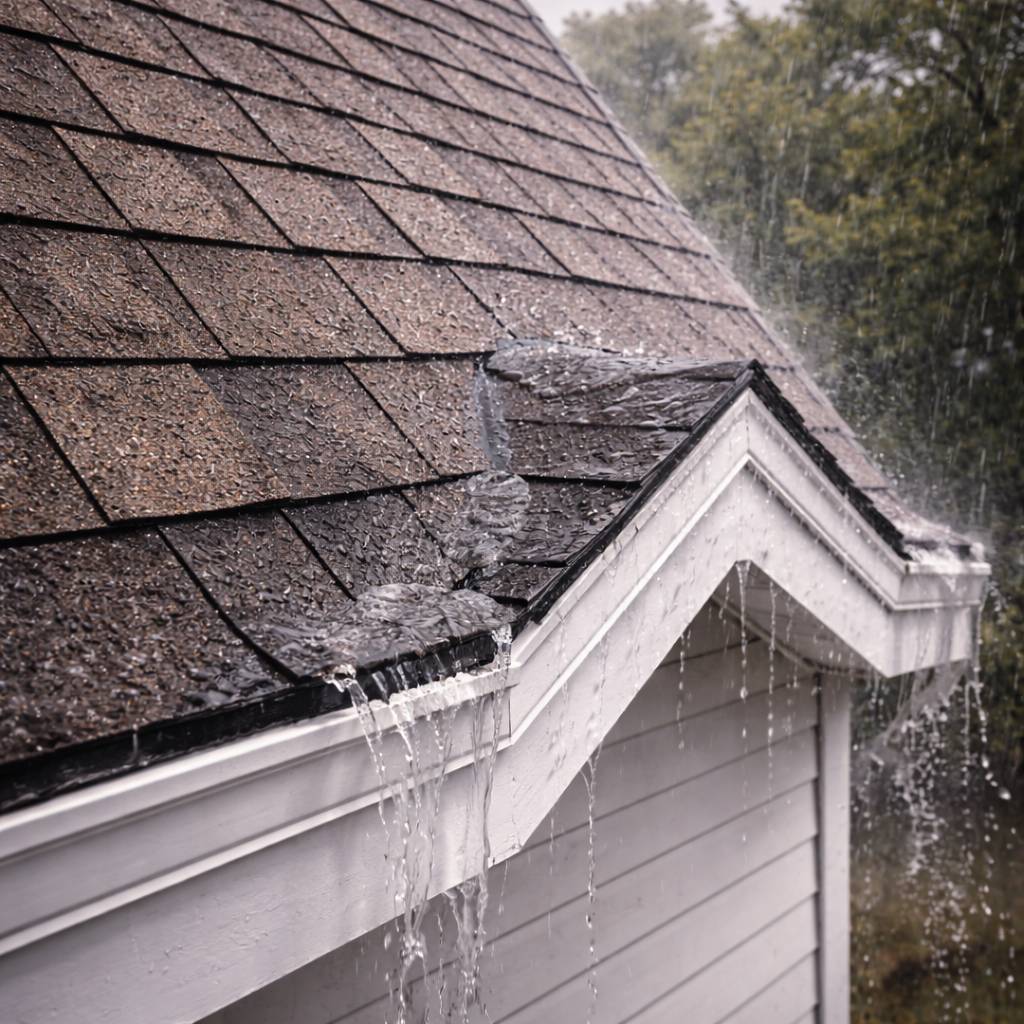
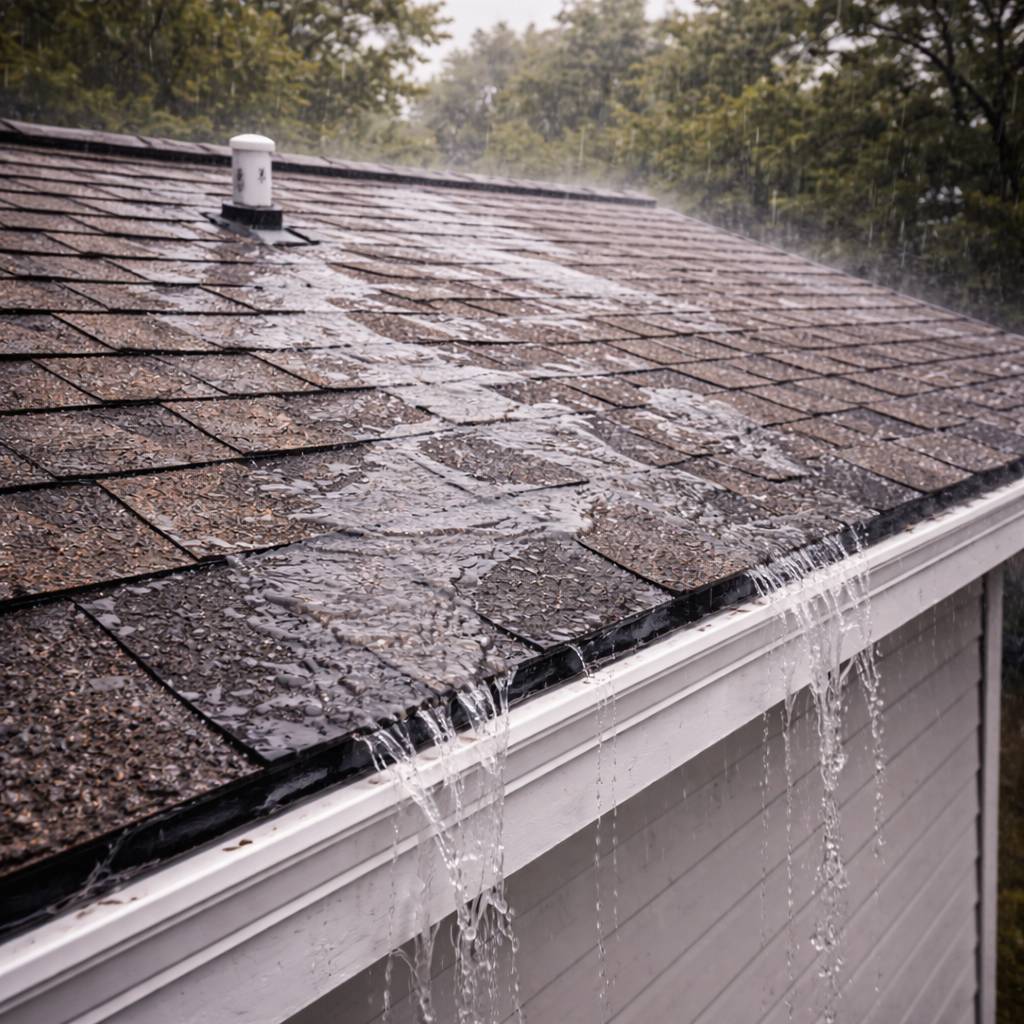
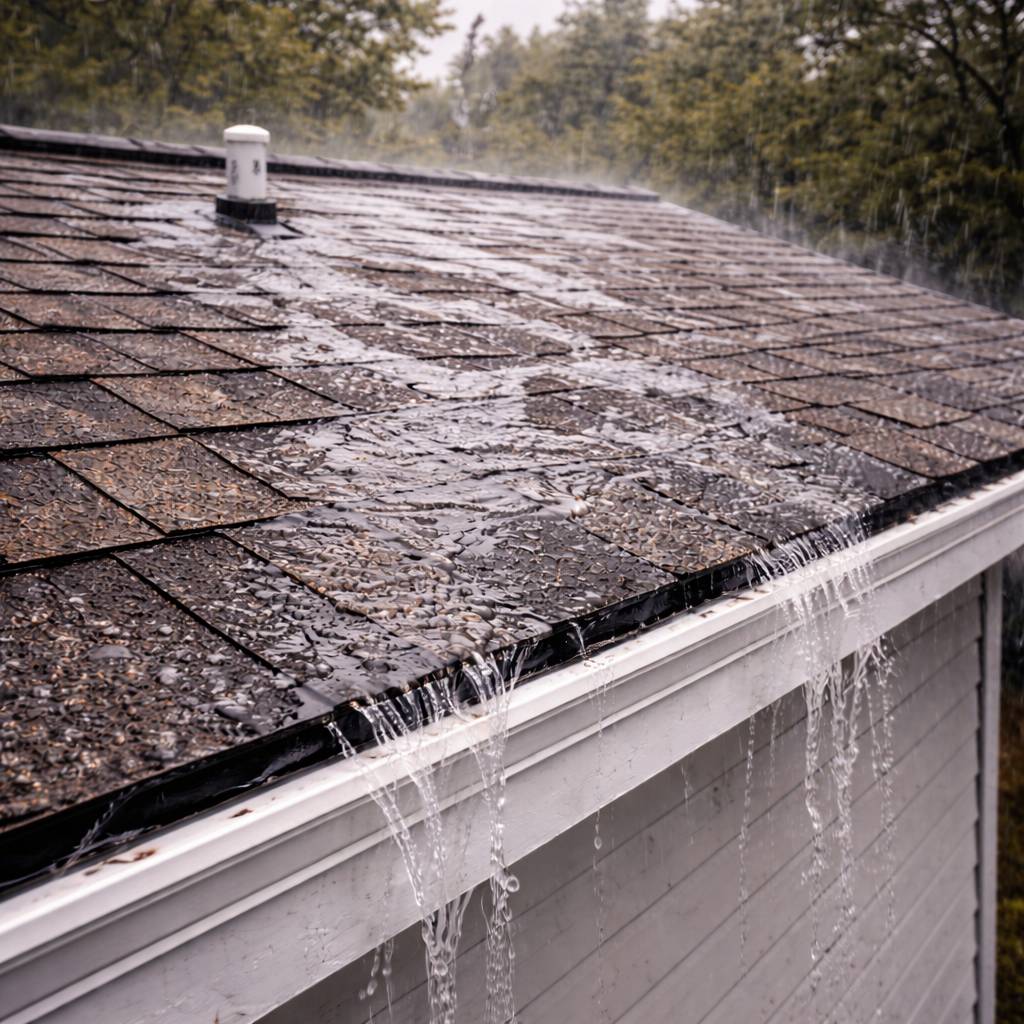
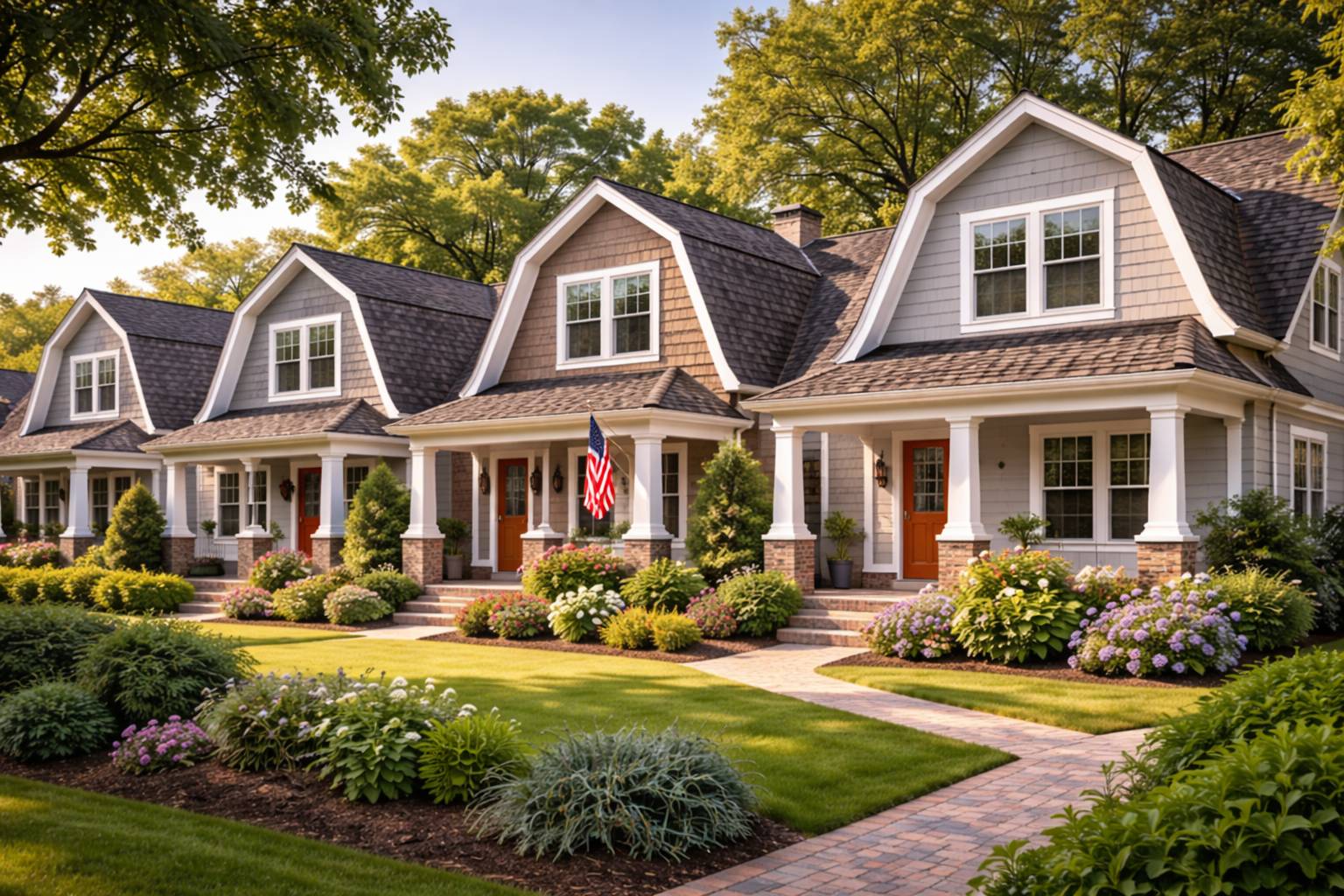
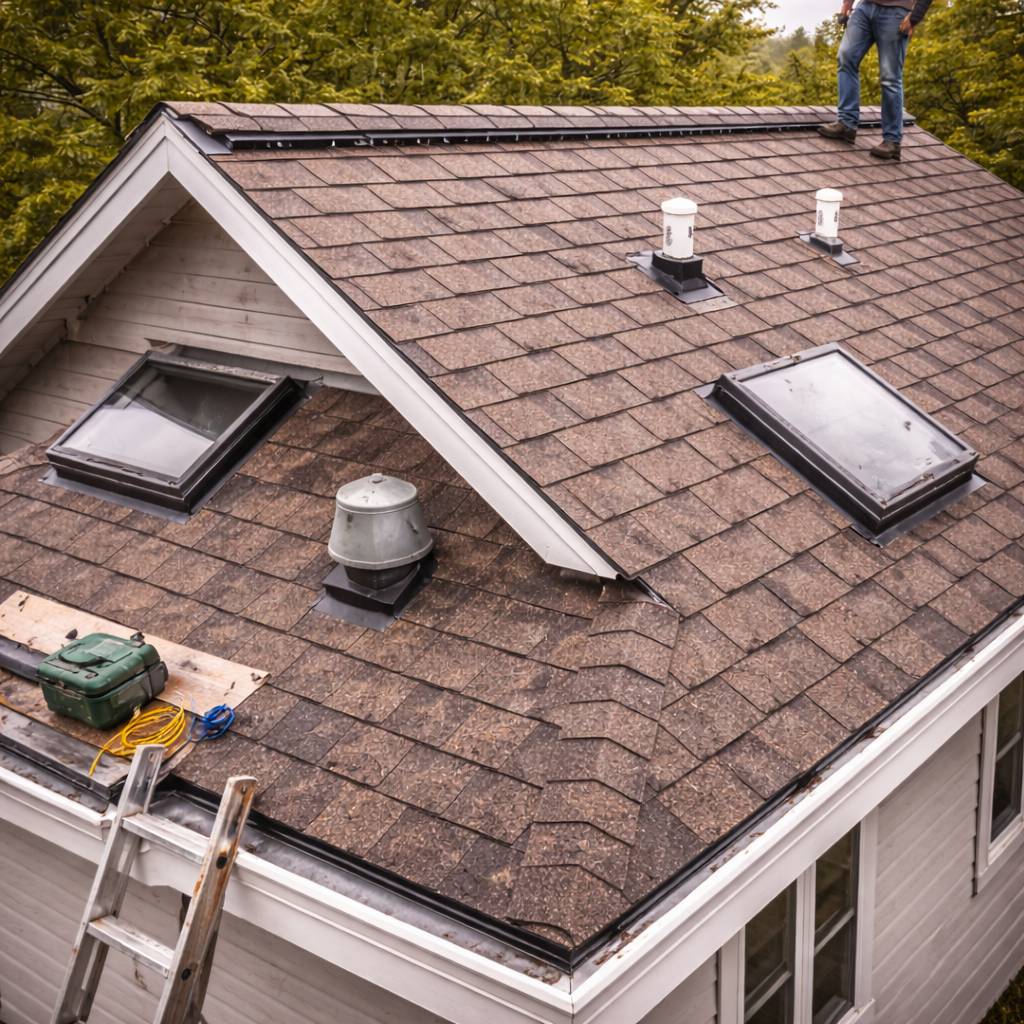
The shallow pitch of a gambrel roof’s upper slope creates a drainage challenge that does not exist on any other residential roof style. Most residential roofing materials, asphalt shingles specifically, have minimum pitch requirements below which they cannot drain water reliably without allowing backflow infiltration under the shingle laps.
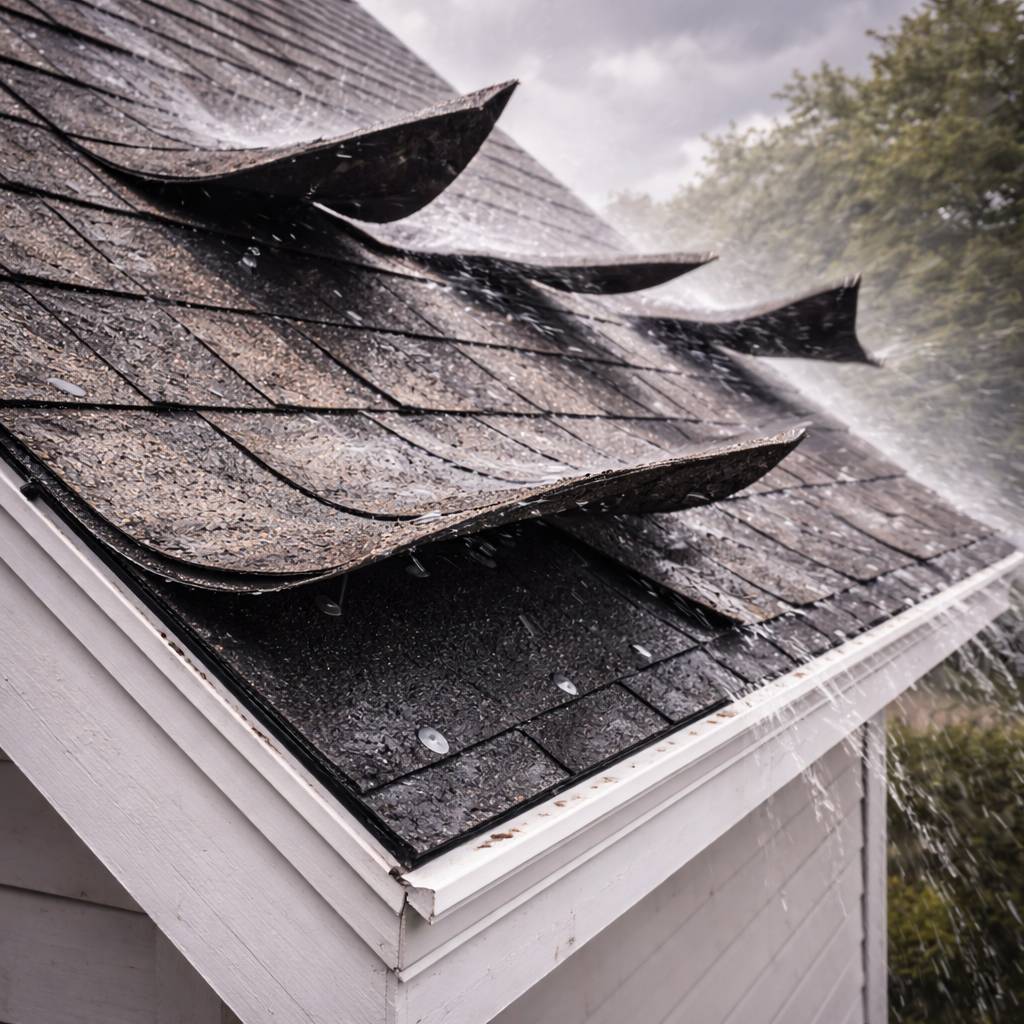
Standard three-tab and architectural asphalt shingles are typically approved for installation down to a 4:12 pitch, four inches of rise per twelve inches of run, with enhanced underlayment requirements. Below a 4:12 pitch the shingle system requires a full ice and water shield membrane beneath the shingles rather than standard felt or synthetic underlayment because the shallow slope does not create sufficient velocity to drain water away from shingle laps before wind or rainfall intensity drives it backward under the shingle edge.
Gambrel roof upper slopes in Louisiana frequently fall in the 2:12 to 3:12 pitch range. At this pitch the standard underlayment specification for the lower slope does not apply. Every square foot of the upper slope requires full ice and water shield coverage beneath the shingles. Without it, regardless of the shingle quality installed above, water infiltration at the shallow slope is a matter of when, not if, in Louisiana’s storm environment.
This is the most commonly skipped specification on gambrel roof installations and repairs in Livingston Parish. A contractor who prices a gambrel roof repair or replacement without including the correct underlayment specification for the upper slope’s shallow pitch is either not charging for the correct material or not installing it. Either way the outcome is the same, a roof that looks complete on the surface but has a systematic infiltration vulnerability at its shallowest section.