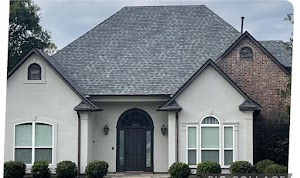
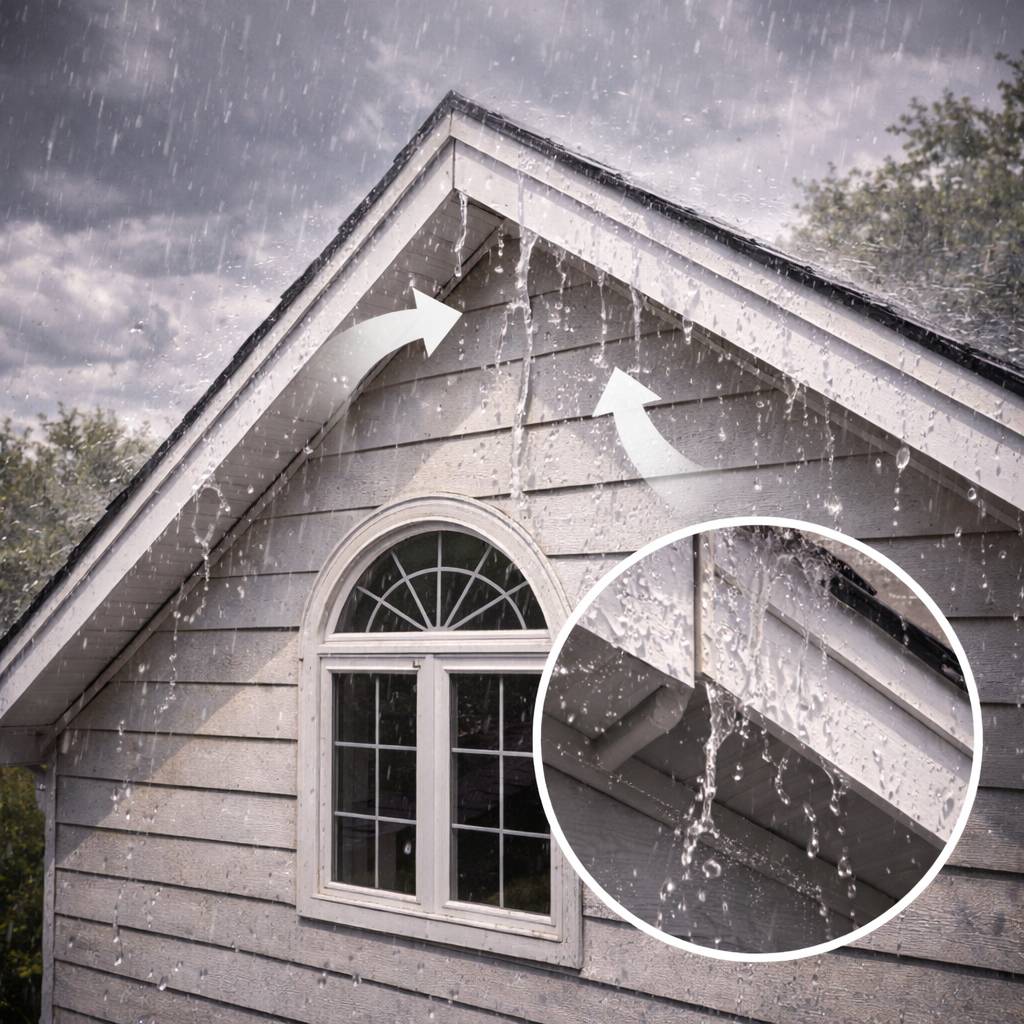
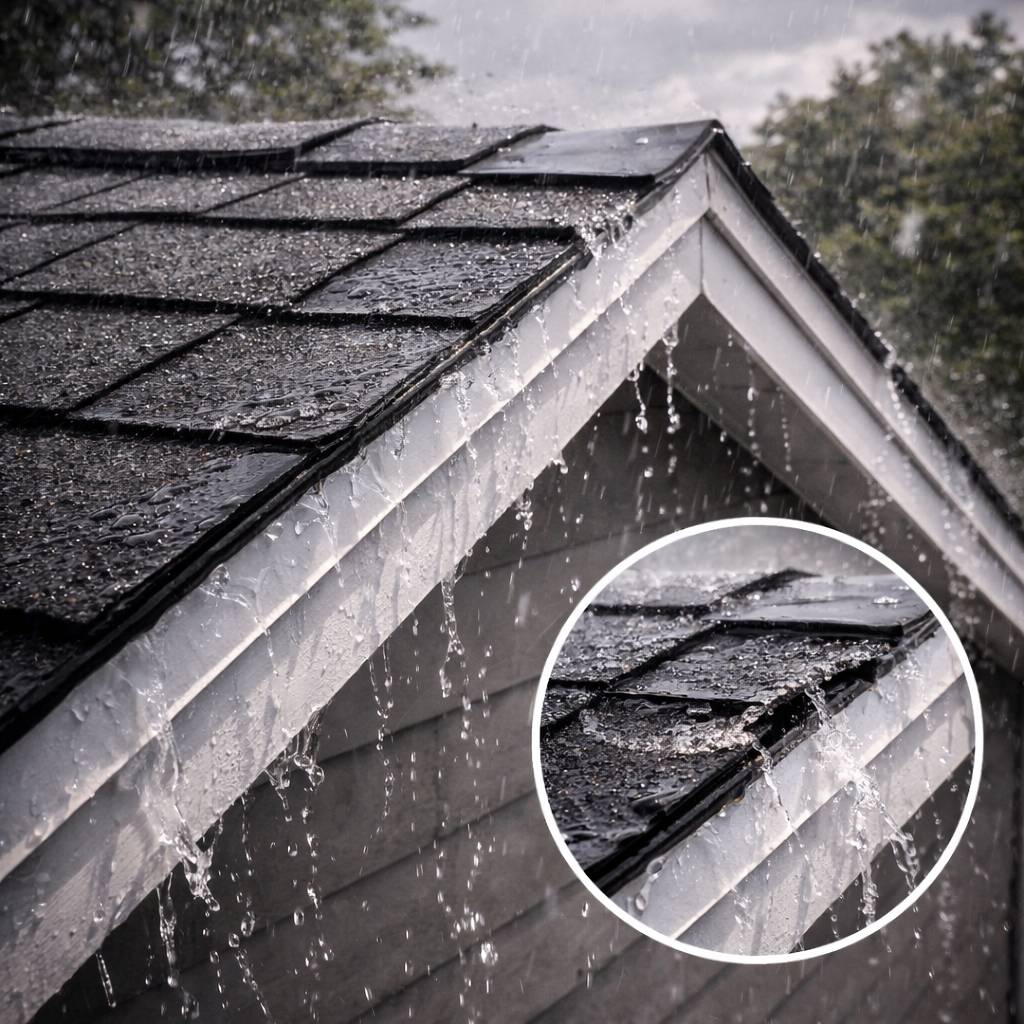
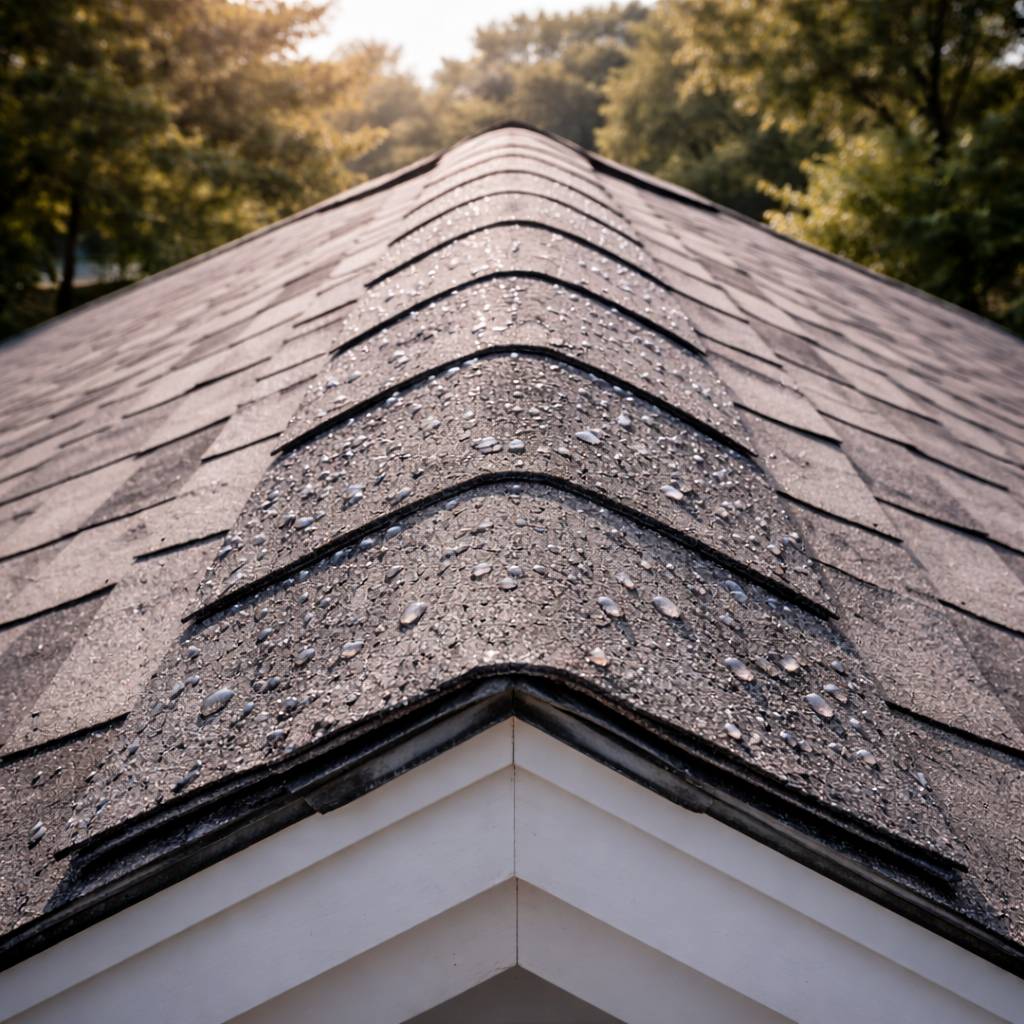
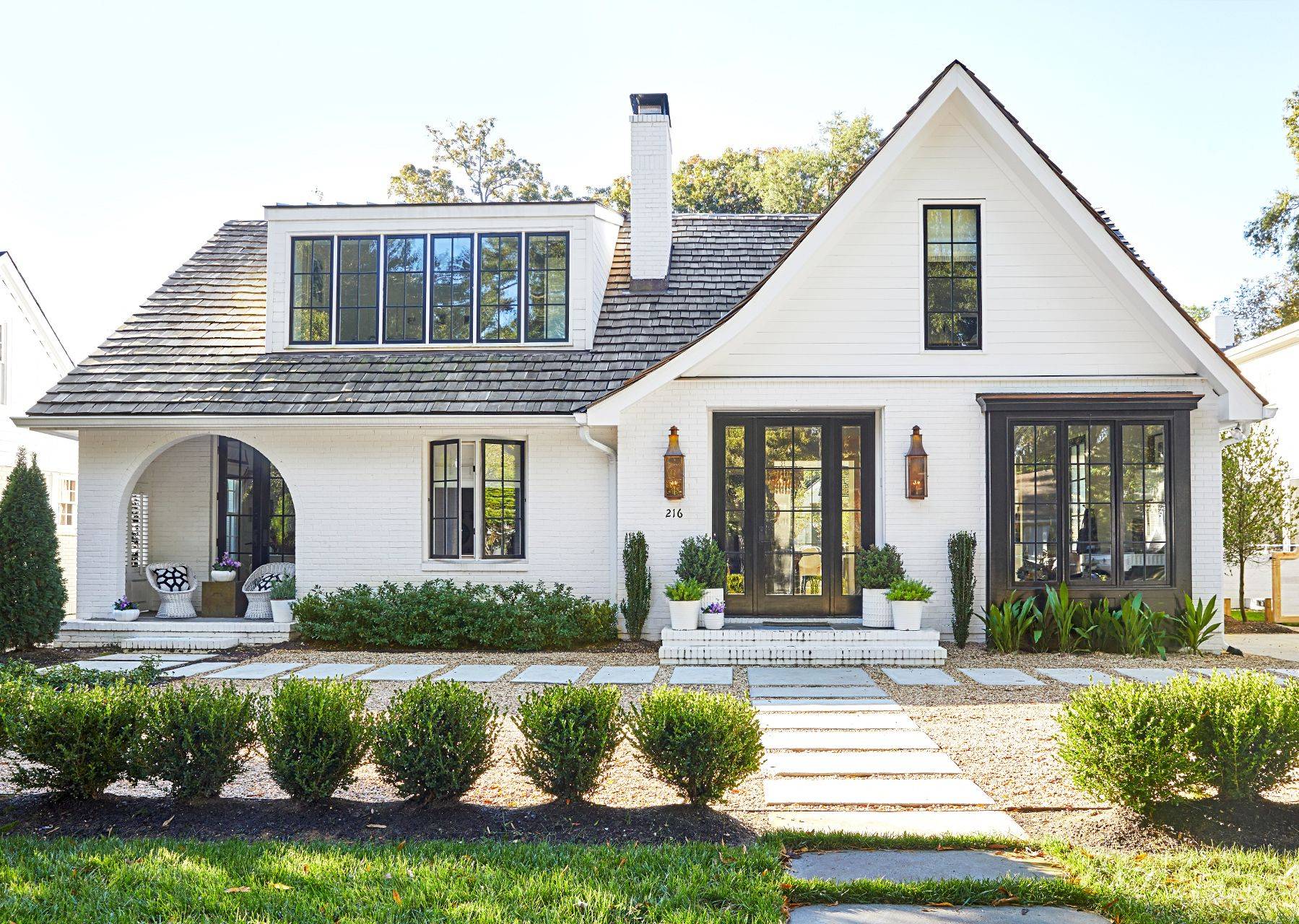
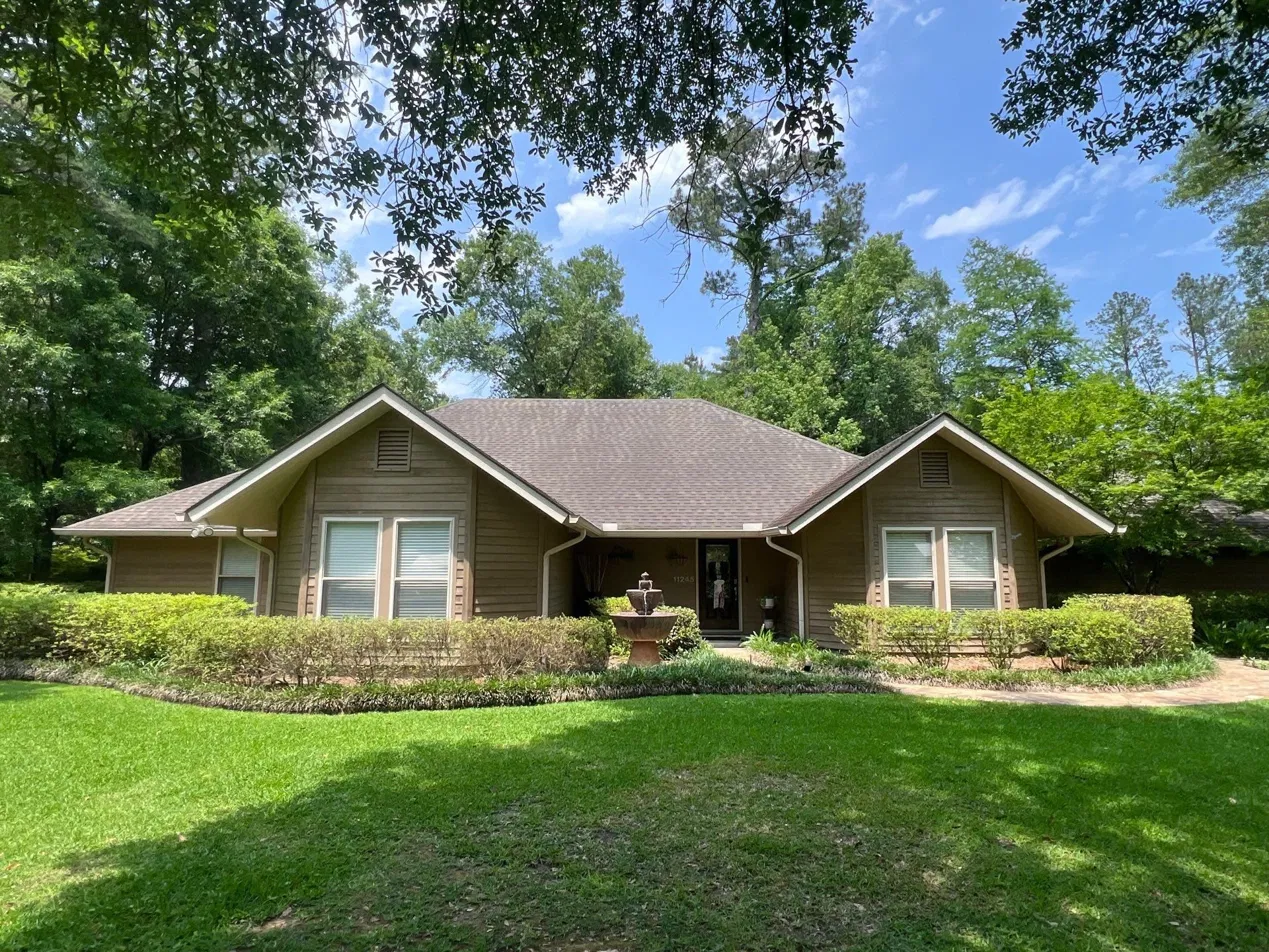
The rake edge is the sloped edge of a gable roof that runs from the eave at the bottom up to the ridge at the peak, along the line directly above the gable end wall. It is the most exposed roof edge on a gable design and the location where wind-driven rain infiltration is most likely to occur during Louisiana storm events.
During a hurricane or severe thunderstorm, wind-driven rain does not fall vertically. It is driven horizontally at high velocity. On a gable roof the rake edge presents the full sloped surface of the roof to wind-driven rain on the upwind end wall. Water driven horizontally under this edge finds any gap in the underlayment, any lifted rake shingle, any separation in the drip edge, and enters directly above the top plate of the exterior wall.
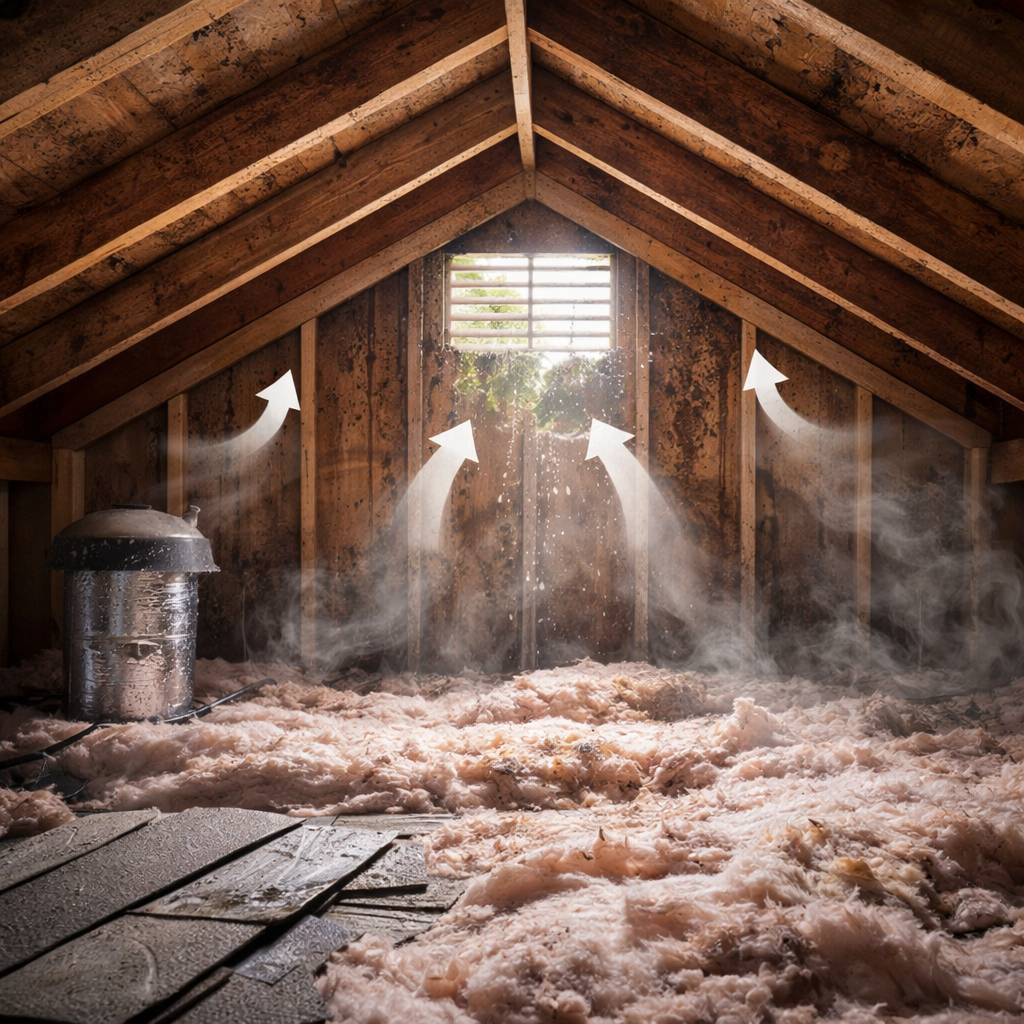
The result is water damage inside the wall cavity, in the ceiling insulation near the rake, and eventually visible as interior ceiling staining near the top corners of the exterior walls. This damage pattern is extremely common on Livingston Parish gable roofs after tropical storms and is almost always traced back to rake edge detail failures, inadequate underlayment extension at the rake, missing or improperly installed drip edge, or lifted rake shingles that have lost their sealant adhesion.
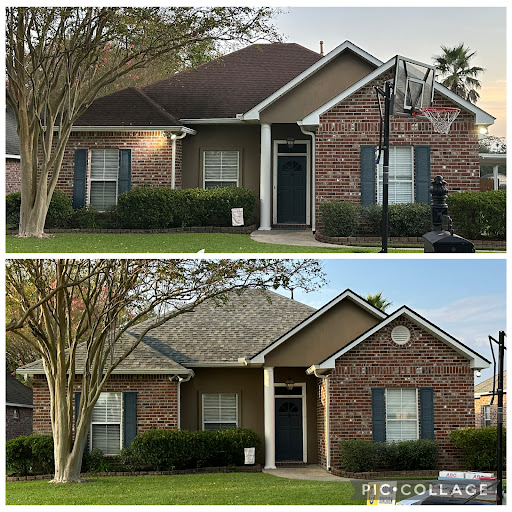
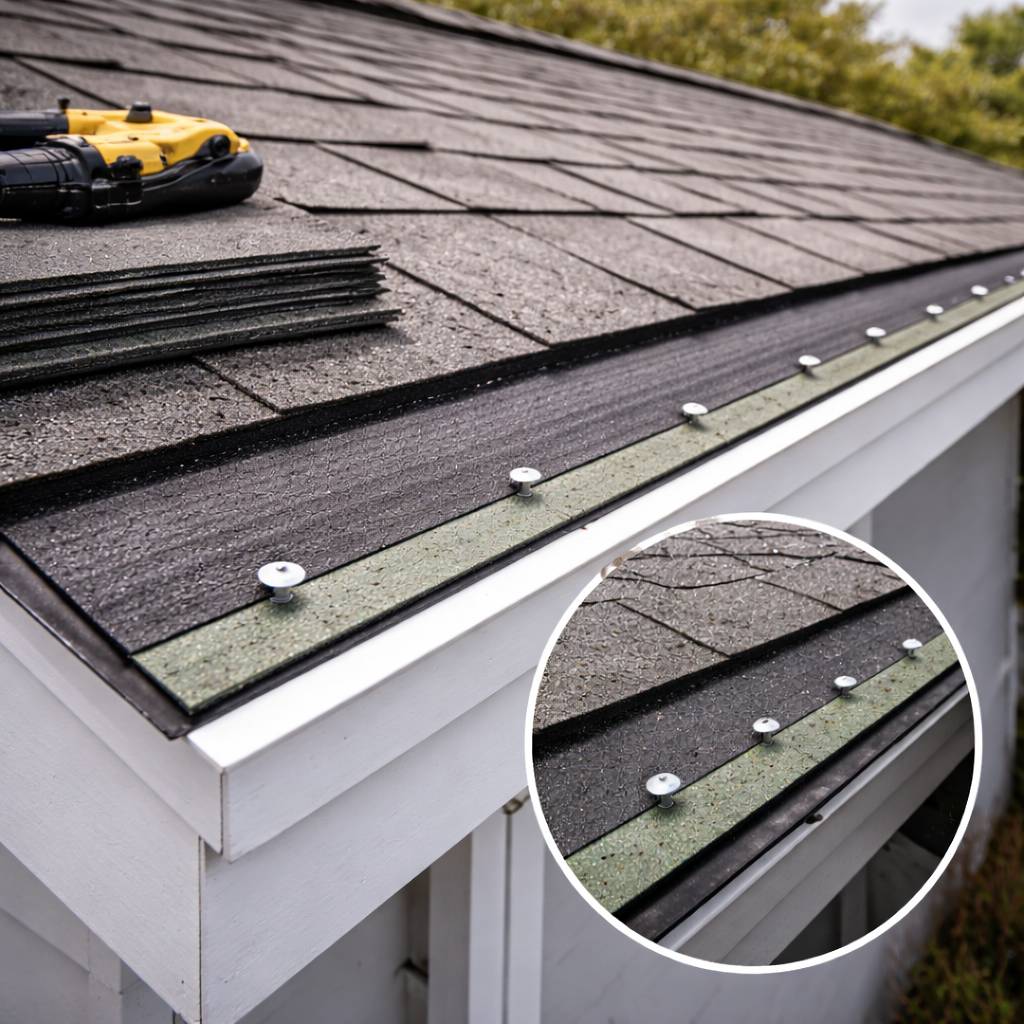
Every JosephMill gable roof installation and repair in Denham Springs addresses rake edge detail specifically. Synthetic underlayment is extended fully to the rake edge and sealed. Drip edge is installed correctly with proper overlap. Starter strips and rake shingles are fastened to manufacturer specifications for Louisiana wind exposure zones.